
Every commercial food-waste system reveals its strength at the first bin.
When a kitchen mixes preparation scraps, plate waste and expired food with packaging, disposable gloves and general rubbish, the business loses control of its organic waste stream before it has had a chance to manage it properly.
No collection service, treatment system or sustainability report can completely undo that first mistake.
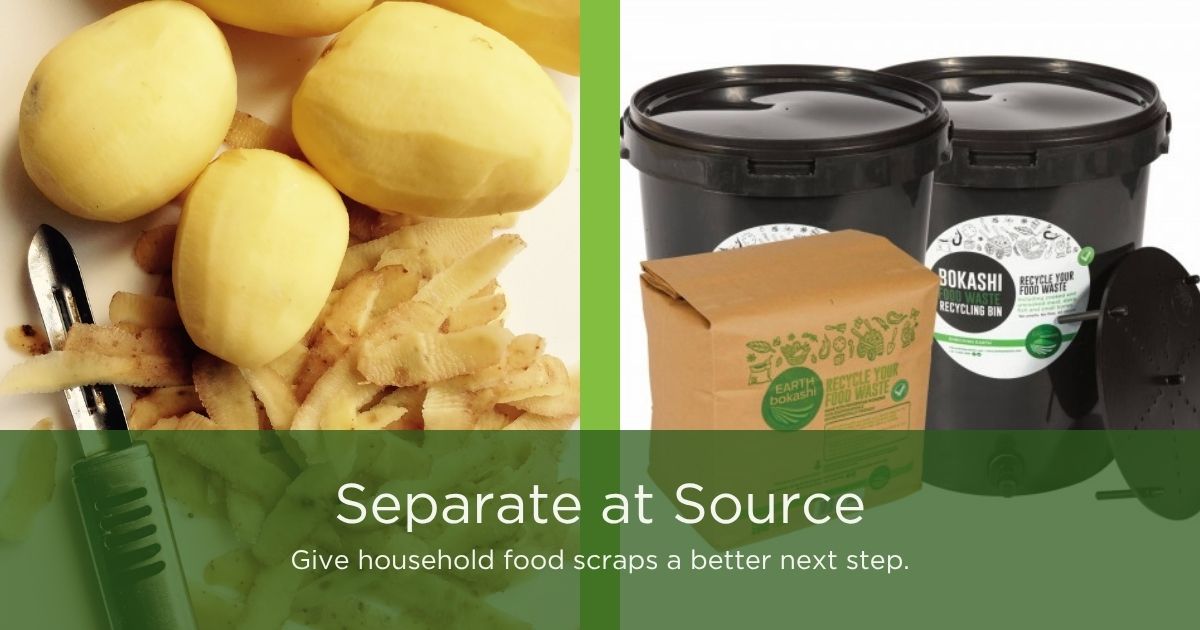
Food waste separation at source means keeping organic material apart from other waste from the moment it is generated. This allows a business to see what it produces, measure volumes, identify avoidable waste and choose a treatment route suited to the site.
It is the logical first step because every decision that follows depends on it.
Food waste is not the villain. The problem develops when businesses mix, store and transport it without a clear plan for prevention, treatment or recovery.
For hotels, lodges, restaurants, hospitals, campuses, shopping centres, offices and staff canteens, the opportunity lies in managing food waste as a controlled operational stream rather than treating it as another bin waiting for collection.
Earth Probiotic works with food-generating operations to assess their waste streams and identify practical commercial food waste solutions suited to their volumes, infrastructure and daily operations.
Food-waste prevention should always come first.
Businesses can reduce avoidable waste through better forecasting, purchasing, stock rotation, storage, menu planning, portion control and the responsible redistribution of suitable surplus food.
However, every food-generating operation will still produce some unavoidable organic waste. Preparation trimmings, peelings, pips, plate waste, bones, shells and ingredients that can no longer be redistributed still need a responsible management route.
That route begins where the waste is generated.
In a busy commercial kitchen, food waste can disappear quickly. Staff scrape vegetable trimmings into a bin during preparation. Buffet returns follow after service. Plate waste arrives later.
By the end of the shift, packaging, plastic film and other rubbish may cover the organic material.
At that point, the business no longer has a clean food-waste stream. It has mixed waste.
Separation at source keeps organic material visible and available for treatment. It also helps the business distinguish between avoidable waste, unavoidable preparation scraps, plate waste, spoiled stock and contamination.
Different problems require different responses.
For example, overproduction may indicate poor forecasting. Plate waste may point to portion size. Contamination may show that staff need clearer instructions.
The first bin is therefore not simply a disposal point. It is the first management decision.
Trying to recover food scraps from a mixed general-waste bin later is inefficient and unlikely to create a consistently clean organic stream.
Even one plastic bag, disposable glove or piece of packaging can affect an otherwise well-separated load.
Food waste separation at source works best when the system reflects how the site actually operates:
This is more than a housekeeping exercise.
The quality of the separated food-waste stream affects what can happen next. Bokashi fermentation, composting and other organic-waste treatment processes all rely on suitable input material.
Once a business mixes food waste with general rubbish, many of these options become more difficult, costly or impractical.
Keeping the stream clean therefore protects its potential for measurement, treatment and appropriate downstream processing.
A waste-management plan may look convincing in a boardroom and still fail during a busy lunch service.
The system must account for what happens after staff separate the food scraps.
Who empties the kitchen container? Where does the material go? How often does someone move it? Who records the volume? What happens during weekends, public holidays or peak trading periods?
These are not secondary details. They form the operating system.
A practical internal collection process should establish:
Untreated food waste can create odour, hygiene and pest-management pressure when containment and collection become inconsistent.
Therefore, the aim is to make separation part of normal operations rather than an extra task that happens only when the kitchen is quiet.
A successful system must work during an ordinary shift, a fully booked weekend and a change of staff.
Many businesses know how often a contractor collects their general waste, but they cannot say how much food waste they generate.
Without a baseline, they struggle to set credible reduction targets, compare treatment options or demonstrate progress.
Measuring the separated food-waste stream helps a business understand:
The information may also reveal useful operational patterns.
For example, a hotel may identify higher buffet waste on particular days. A canteen may discover that plate waste rises with a certain menu. A retailer may uncover recurring losses in one product category.
This gives food-waste management a commercial purpose. It connects waste information with purchasing, preparation, service and food costs.
Monitoring systems can also make inputs, treatment activity and outputs more visible.
Technology cannot correct poor separation. However, it can give facilities teams and management a clearer view of whether the system is working.
Good reporting begins with good input.
Separation at source creates a cleaner organic stream. The next question is how the business should treat it.
There is no responsible one-size-fits-all answer.
Earth Probiotic provides several commercial food waste solutions, each suited to different operating conditions.
Commercial Bokashi collections can suit smaller commercial kitchens and canteens that need a relatively simple system with minimal infrastructure.
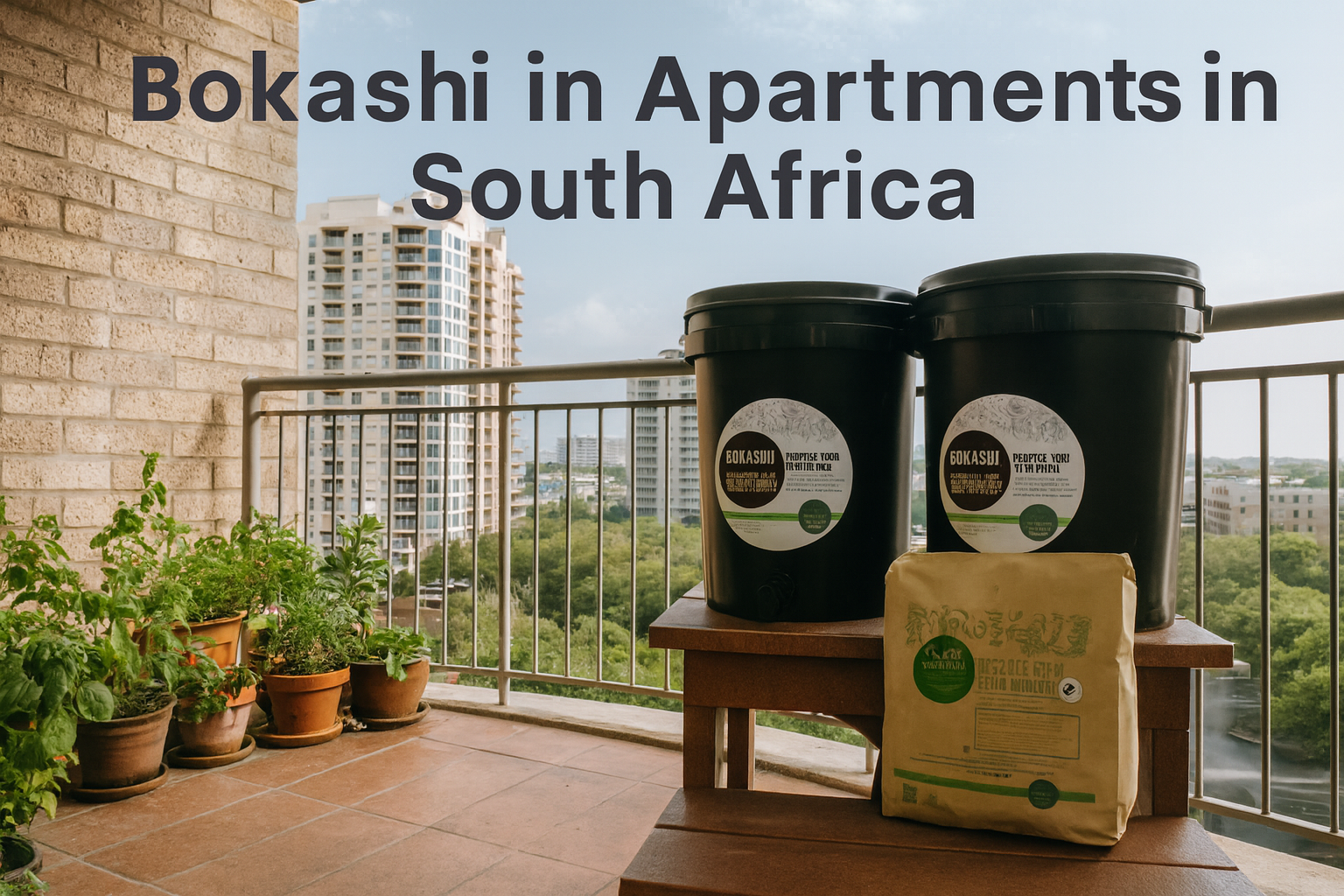
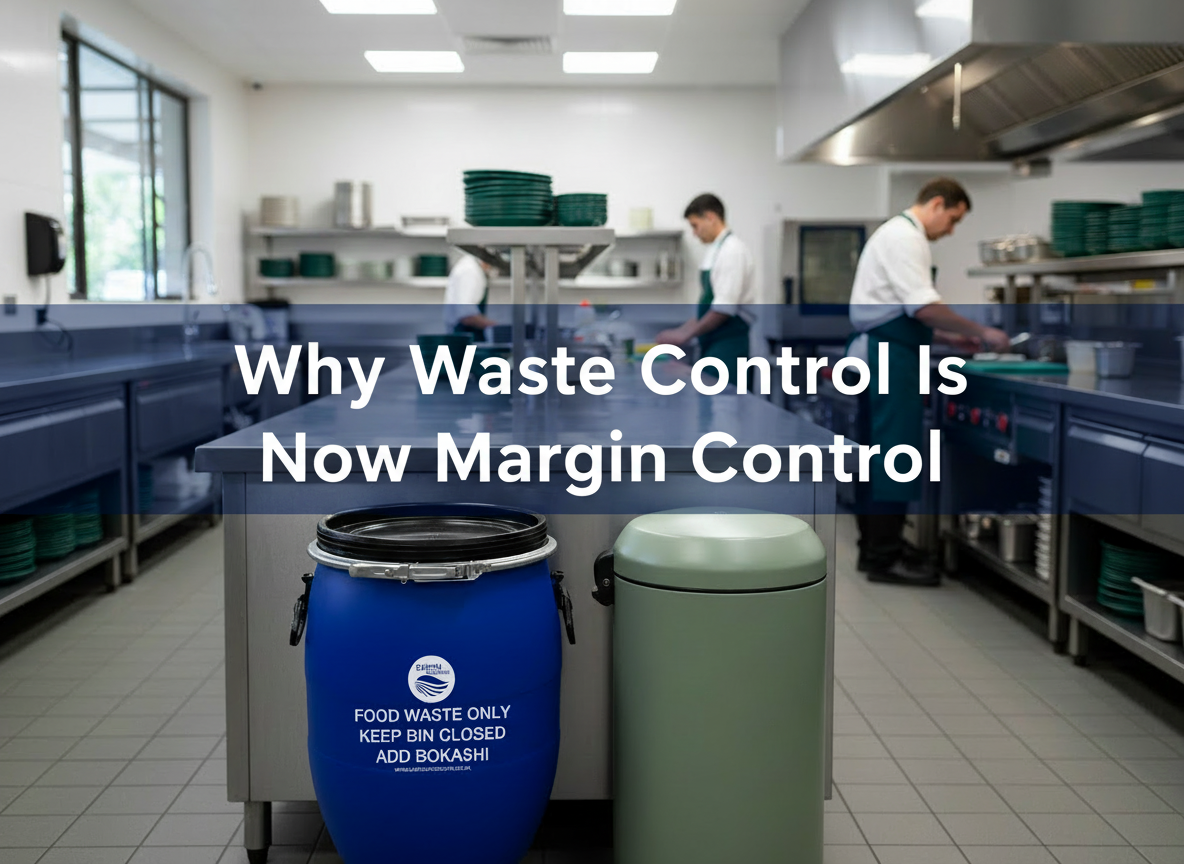
Staff place the food waste into sealed, food-grade drums and treat it with Earth Bokashi. The system requires no power and allows for flexible collection or onward processing schedules.
Earth Probiotic currently positions this option for sites producing up to approximately 2,000 kilograms of food waste per month.
The Earth Cube is an enclosed, aerated static-flow system manufactured under licence in South Africa.
It can process up to approximately 18 kilograms of food waste per day, or around 600 kilograms per month. Earth Probiotic identifies lodges, boarding houses and campuses with distributed kitchens as suitable settings.
Sites can also install multiple units where additional capacity is required.
For higher-volume operations, the Earth Cycler provides a locally manufactured, automated in-vessel composting system.
The system supports continuous food-waste processing and is available in models with capacities of approximately five and ten tonnes per month. Optional data connectivity can support monitoring and reporting.
The right solution depends on:
Choosing equipment first and then trying to force the waste stream into it is the wrong way round.
The waste profile should determine the system.
Material leaving an organic-waste treatment system may look like compost, but appearance alone does not show whether it is mature or ready for use.
Bokashi-treated food waste is fermented rather than fully composted. It still needs to move into composting, suitable soil incorporation or another appropriate organic-waste process.
Similarly, material produced through an onsite system may need further maturation, depending on the inputs, operating conditions and treatment stage.
A business should plan this onward pathway before treatment begins.
It needs to know:
Appropriate downstream pathways may include composting, landscaping, soil improvement and rehabilitation support, provided the material has completed the necessary process and is suitable for its intended use.
Circular value does not appear simply because food waste has passed through equipment.
Instead, businesses protect that value by managing the entire pathway from the kitchen to the appropriate final destination.
For many businesses, waste removal has become the default measure of success.
The bin is emptied. The collection vehicle leaves. The problem appears to have disappeared.
But removal is not the same as resolution.
Untreated food waste still needs storage, collection, loading and transport. Every movement carries a cost and leaves the business dependent on collection schedules.
These pressures become more visible when routes are long, sites are remote or collections are delayed.
Onsite treatment gives a business greater control of the organic stream where it is generated. It can reduce dependence on transporting untreated, putrescible food waste and create a clearer pathway for what happens next.
This does not mean all transport disappears. Inputs, contaminants and treated material may still need to move.
The difference is that the business no longer automatically transports every kilogram of untreated food waste before trying to reduce its impact or protect its potential value.
The better question is not only:
Who collects our food waste?
It is:
Why are we transporting it untreated, and what is the planned outcome once it leaves the site?
A machine cannot separate food scraps in the kitchen.
A container cannot train a new employee.
A reporting dashboard cannot prevent contamination unless someone responds to the information it provides.
Successful commercial food-waste management depends on the complete system:
The role of a waste-management partner therefore extends beyond supplying equipment.
It includes understanding the site, matching the solution to the waste profile, helping establish operating procedures and supporting the people responsible for running the system.
The strongest commercial solution is not necessarily the largest or most automated.
It is the one staff can use consistently and the business can manage responsibly from beginning to end.
Food waste does not become circular simply because someone places it in a different container.
The whole pathway matters.
Prevent avoidable food waste.
Separate the unavoidable fraction at source.
Measure what the site generates.
Collect it consistently.
Treat it according to the site’s needs.
Manage the treated material responsibly.
Direct suitable material towards the appropriate downstream pathway.
When these stages work together, food waste becomes more than a collection problem.
It becomes a measurable organic stream that a business can reduce, treat and prepare for a more useful outcome.
The shift from waste liability to circular value begins before collection and before transport.
It begins at the source.
Separate at source. Treat according to scale. Protect the next pathway.
Explore Earth Probiotic’s commercial food waste solutions or contact the team to discuss the requirements of your site.
For technical guidance on Bokashi, Earth Cube and Earth Cycler systems, visit the Earth Probiotic FAQ page.