What This Article Covers
• How national and Western Cape waste legislation affects restaurants
• Why organic waste is being progressively restricted from landfill
• The environmental and financial risks of unmanaged food waste
• Why separation and measurement are becoming operational essentials
• What structured food waste diversion looks like in practice
Compliance Is Moving Closer to the Kitchen
Food waste to landfill is being progressively restricted in the Western Cape.
Under South Africa’s National Environmental Management: Waste Act and the Western Cape Provincial Waste Management Strategy, the government has committed to reducing organic waste sent to landfill. This is part of a broader effort to extend landfill lifespan and reduce methane emissions.
For restaurants, this is not theoretical policy. It is an operational shift that will increasingly affect how kitchens manage organic waste.
Organic waste is no longer viewed as ordinary refuse. It is a regulated waste stream that requires separation and responsible diversion.
Why Organic Waste Is Under Scrutiny
Organic waste behaves differently from general waste in a landfill.
When food waste decomposes without oxygen, it produces methane, a greenhouse gas significantly more potent than carbon dioxide. Organic material also takes up valuable landfill airspace. In many municipalities across South Africa, landfill capacity is already under pressure.
Because restaurants generate consistent volumes of food waste, the hospitality sector forms part of the broader diversion conversation.
Prep waste. Spoilage. Plate returns.
These are no longer invisible outputs. They are measurable environmental inputs.
Prevention Comes First. But Diversion Is Still Essential.
The most effective sustainability strategy is always prevention. Reducing over-ordering, improving stock management and minimising plate waste should remain a priority.
However, even the most efficient kitchen produces unavoidable organic waste.
This is where structured diversion becomes critical.
The Western Cape’s waste strategy increasingly encourages separation at source so that organic material can be managed differently from general waste. Without separation, measurement is impossible. Without measurement, compliance becomes difficult to demonstrate.
Clarity precedes control.
The Financial Risk Restaurants Often Miss
Many restaurant operators underestimate the scale of their monthly food waste.
Small daily volumes accumulate quickly. Over time, this affects:
• Waste collection frequency
• Disposal costs
• Operational hygiene
• Potential regulatory exposure
As landfill diversion targets tighten, businesses that cannot demonstrate responsible waste handling may face increasing pressure.
Waste management is no longer simply a facilities issue. It is becoming part of operational governance.
What Structured Organic Waste Diversion Looks Like
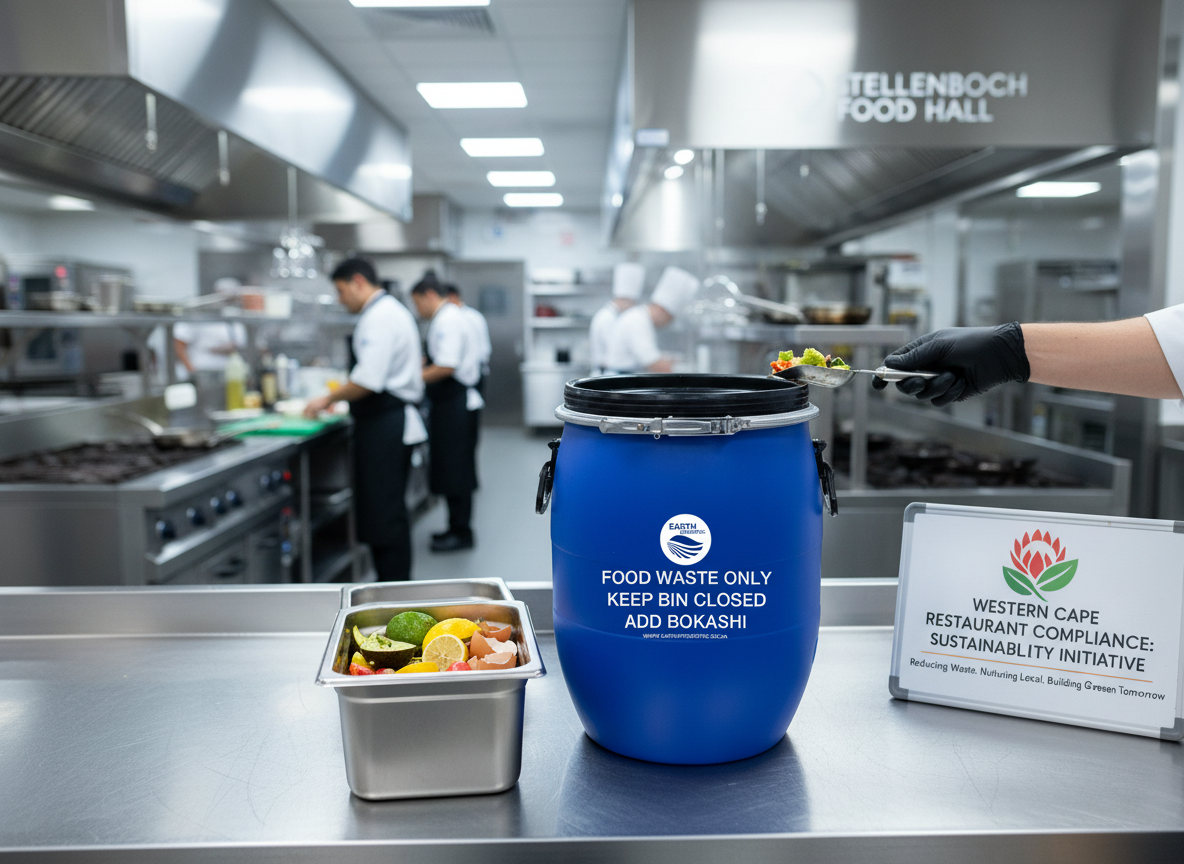
Effective food waste management does not require complex infrastructure. It requires a process.
In practical terms, structured diversion for restaurants includes:
• Daily separation of organic waste at source
• Clear labelling and staff training
• Controlled storage to reduce odour and contamination risk
• Diversion through appropriate composting, treatment or stabilisation systems
• Basic tracking of volume and impact
Diversion must be properly managed to avoid secondary environmental risks such as contamination or improper disposal. Structure is what makes diversion credible.
When integrated correctly, these processes improve hygiene standards, reduce landfill dependency and strengthen operational oversight.
Restaurants do not need disruption.
They need clarity and consistency.
From Disposal to Responsibility
Waste strategy in the Western Cape is evolving.
While enforcement remains progressive and often threshold-based, the direction of travel is clear. Organic waste is being treated differently. Landfill reliance is being reduced. Diversion expectations are increasing.
Restaurants that begin adapting now gain three advantages:
• Reduced future compliance pressure
• Improved cost visibility
• Stronger sustainability positioning with customers and partners
The shift is gradual. But it is steady.
The question is not whether waste regulation will influence hospitality.
It is whether restaurants will prepare early or respond later.
Conclusion
Food waste is no longer just an operational by-product. It is part of a broader environmental and regulatory landscape in the Western Cape.
Prevention remains the first priority. But structured diversion addresses the unavoidable reality of commercial kitchen waste.
Restaurants that formalise their approach today will be better positioned for tomorrow’s regulatory environment.
If you operate a restaurant in the Western Cape, review your organic waste management process now.
Speak to Earth Probiotic about structured food waste diversion solutions designed for commercial kitchens. Align early, manage risk responsibly and protect your margins as legislation continues to evolve.
52 Ways to live a more eco friendly lifestyle