
Bokashi for small spaces can give households a practical way to manage food scraps, even without a traditional garden.
In fact, a balcony, courtyard, patio, townhouse garden or a few well-planned containers can be enough to connect what happens in your kitchen with what happens in the soil.
Bokashi gives households a practical way to separate and treat food waste at source. After fermentation, the treated food scraps can move into an appropriate composting or soil process instead of disappearing into the general bin.
As spring arrives, it is also a good time to think about that entire journey.
The aim is not to turn every balcony into a vegetable farm. Instead, it is to understand that even a household with very little outdoor space can manage food scraps differently.
Traditional composting can be difficult when outdoor space is limited.
However, the Bokashi treatment stage takes place inside a sealed container rather than in a large outdoor compost heap.
You separate food scraps in the kitchen, place them in the Bokashi bin and add Earth Bokashi as you build up the layers.
Once the bin is full, keep it sealed for a further two weeks so that the final layers can complete fermentation.
As a result, households can treat food scraps without needing a large garden or conventional compost heap.
However, the bucket is only the first part of the process.
Before you start, it helps to know where the fermented material will go next.
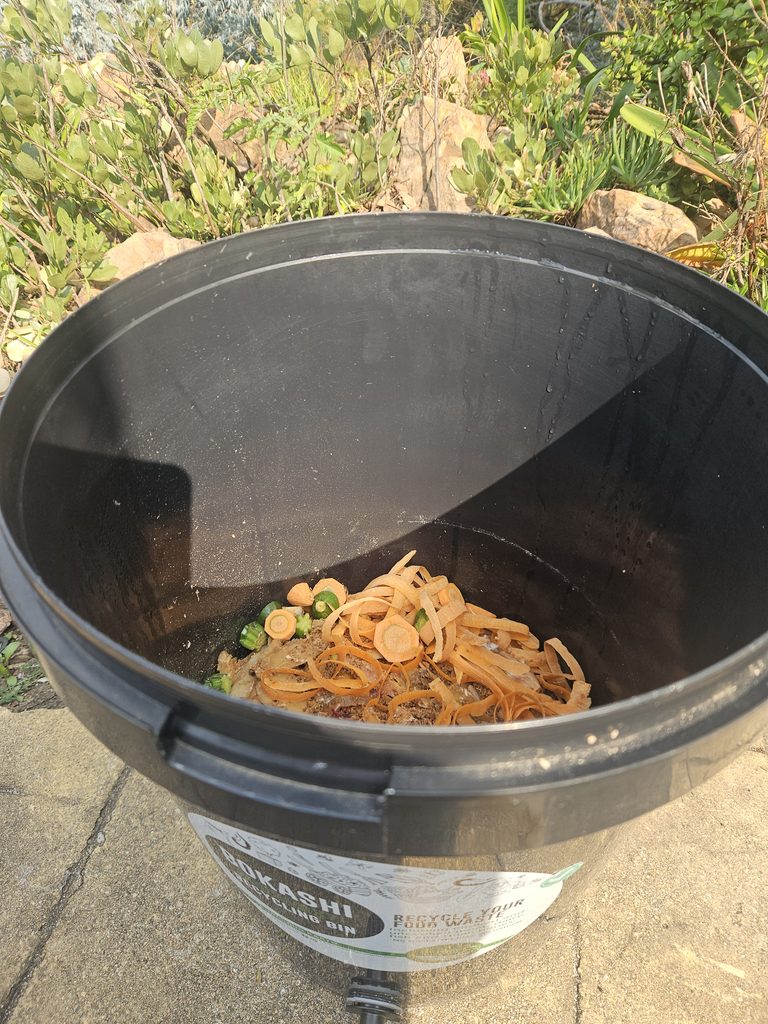
One of the most important things to understand about Bokashi is that the bucket does not produce finished compost.
Bokashi uses fermentation to treat food scraps.
Therefore, when you open a properly fermented bucket, the material may still look surprisingly similar to the food that went in.
That does not mean the process has failed.
Instead, fermentation has prepared the food waste for its next stage.
Depending on the space and system available, the fermented material can move into:
The right option depends on your household and the space available.
Earth Probiotic explains the process in more detail in its Bokashi FAQ.
This is where Bokashi for small spaces becomes especially practical.
For example, if you live in a townhouse, apartment or home with only a courtyard or balcony, a traditional compost heap may simply take up too much space.
A soil factory can provide another option.
Essentially, you combine fermented Bokashi food waste with soil or suitable growing material in a separate contained area. The organic material then continues through its next stage of decomposition.
Because the process can take place in a container, you do not need to dedicate a large section of garden to composting.
For someone who wants to grow a few herbs, vegetables or flowers, this creates a realistic link between kitchen food scraps and future soil use.
Therefore, think about the full Bokashi journey before your first bucket is full.
The system works better when you already know where the fermented material will go next.
Freshly fermented Bokashi is not the same thing as ready-to-use potting compost.
Although the food scraps have completed the fermentation stage, they still need an appropriate soil or composting stage.
This distinction matters even more in small containers because plant roots and fermented food waste would otherwise occupy the same limited space.
Therefore, a separate soil factory can be particularly useful for small-space growers.
Once the organic material has completed the appropriate next stage, it can become part of the growing cycle.
Bokashi is the treatment stage. It is not instant finished compost.
Spring growing does not need to begin with raised beds or a sprawling vegetable patch.
Instead, start with the space you already have.
Next, look at the amount of sunlight the area receives and think about what you actually use in your kitchen.
For example, a few pots of herbs may be far more useful than a large collection of vegetables nobody in the household eats.
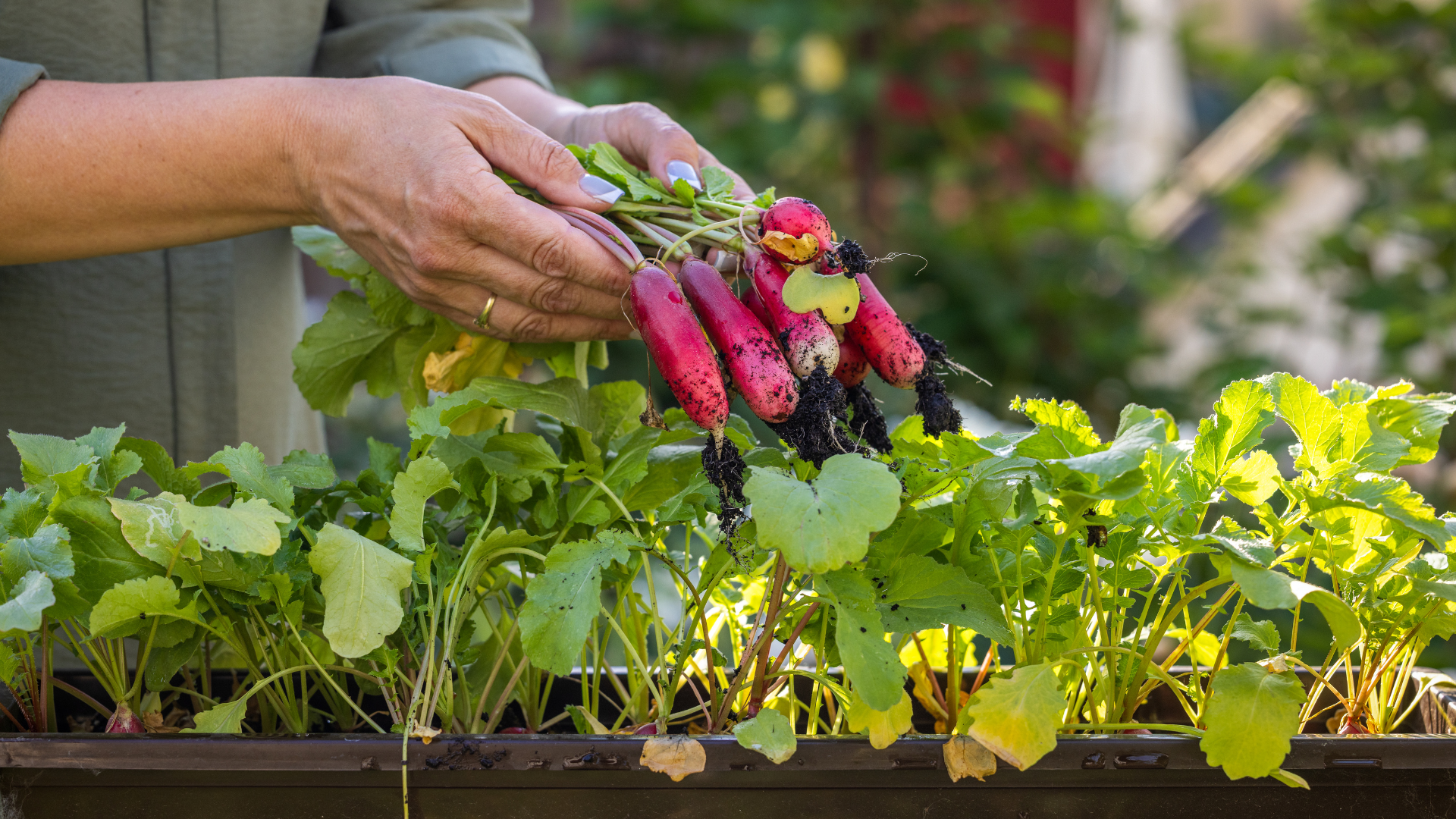
Depending on your local conditions, herbs and compact vegetables can work particularly well in pots and planters.
Above all, start at a scale you can maintain.
You do not need dozens of plant varieties. Instead, think about what regularly appears in your kitchen.
Herbs are often an easy starting point because they work well in containers and you can harvest them as you need them.
Depending on your climate, position and available sunlight, you could consider:
Of course, every balcony, courtyard and garden has different growing conditions.
Therefore, choose plants that suit your available sunlight, container size and local climate rather than trying to grow everything at once.
Three healthy containers will usually give you more satisfaction than fifteen neglected ones.
It is easy to think of this as a gardening story. However, it actually starts as a food-waste story.
The most important decision happens before anything reaches the soil. It happens when you keep food scraps separate from general waste.
Once food waste becomes mixed with plastics, packaging and ordinary household rubbish, many useful options become more difficult.
Separation at source protects the organic stream.
Next, Bokashi gives you a practical way to treat those separated food scraps through fermentation.
After fermentation, you move the treated material into its appropriate composting or soil stage.
For broader South African context, WWF South Africa has also examined the scale and environmental consequences of food loss and waste in its Food Loss and Waste: Facts and Futures report.
In simple terms, the household journey looks like this:
Every stage has a purpose.
Limited outdoor space does not mean food scraps automatically belong in the general bin.
Instead, your food-waste system simply needs to suit your home.
For some households, that may mean a Bokashi bucket and a small soil factory. Others may have access to a compost heap, worm farm, family garden or another suitable outlet.
Bokashi for small spaces works best when you plan both the fermentation stage and what will happen to the treated material afterwards.
Earth Probiotic offers household Bokashi solutions for people who want to separate and treat food waste at home.
Explore Earth Probiotic’s food-waste solutions.
For many households, filling the Bokashi bucket is the easy part.
What happens afterwards depends on whether you have access to a garden, compost heap, worm farm, soil factory or another appropriate option.
If you have very little or no outdoor space, Earth Probiotic has also looked specifically at how Bokashi can work in apartments.
Read Small Space, Big Impact: How Bokashi Works in Apartments.
Spring tends to make us notice soil again. We buy seedlings, clean out pots and start thinking about herbs outside the kitchen or a few vegetables for summer.
However, the cycle can begin before the nursery. It can begin with the scraps left on the chopping board.
Using Bokashi for small spaces does not mean one bucket of food waste instantly becomes a thriving vegetable garden.
Instead, it means managing each stage properly.
You do not need a huge garden to begin.
Sometimes a kitchen bucket, a little growing space and a better plan for food scraps are enough.
For another practical way to rethink household food scraps, read The Great Food Scrap Rescue Bingo Challenge: Bokashi Food Waste Recycling at Home.
Bokashi for small spaces can give households a practical way to manage food scraps, even without a traditional garden.
In fact, a balcony, courtyard, patio, townhouse garden or a few well-planned containers can be enough to connect what happens in your kitchen with what happens in the soil.
Bokashi gives households a practical way to separate and treat food waste at source. After fermentation, the treated food scraps can move into an appropriate composting or soil process instead of disappearing into the general bin.
As spring arrives, it is also a good time to think about that entire journey.
The aim is not to turn every balcony into a vegetable farm. Instead, it is to understand that even a household with very little outdoor space can manage food scraps differently.
Traditional composting can be difficult when outdoor space is limited.
However, the Bokashi treatment stage takes place inside a sealed container rather than in a large outdoor compost heap.
You separate food scraps in the kitchen, place them in the Bokashi bin and add Earth Bokashi as you build up the layers.
Once the bin is full, keep it sealed for a further two weeks so that the final layers can complete fermentation.
As a result, households can treat food scraps without needing a large garden or conventional compost heap.
However, the bucket is only the first part of the process.
Before you start, it helps to know where the fermented material will go next.
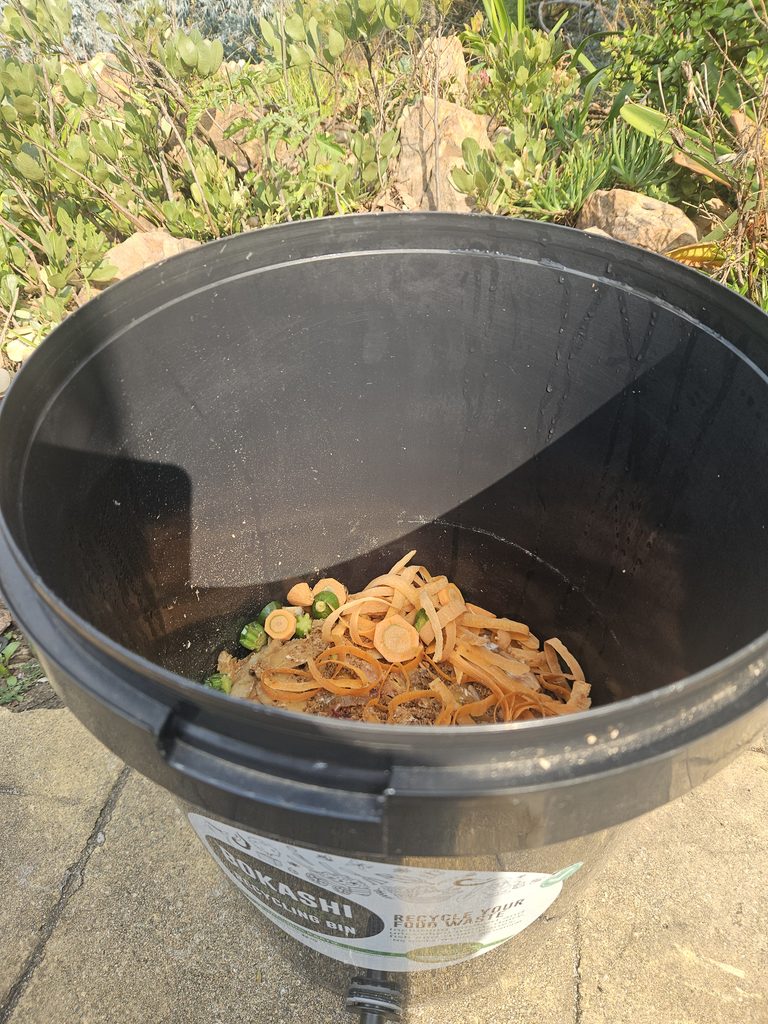
One of the most important things to understand about Bokashi is that the bucket does not produce finished compost.
Bokashi uses fermentation to treat food scraps.
Therefore, when you open a properly fermented bucket, the material may still look surprisingly similar to the food that went in.
That does not mean the process has failed.
Instead, fermentation has prepared the food waste for its next stage.
Depending on the space and system available, the fermented material can move into:
The right option depends on your household and the space available.
Earth Probiotic explains the process in more detail in its Bokashi FAQ.
This is where Bokashi for small spaces becomes especially practical.
For example, if you live in a townhouse, apartment or home with only a courtyard or balcony, a traditional compost heap may simply take up too much space.
A soil factory can provide another option.
Essentially, you combine fermented Bokashi food waste with soil or suitable growing material in a separate contained area. The organic material then continues through its next stage of decomposition.
Because the process can take place in a container, you do not need to dedicate a large section of garden to composting.
For someone who wants to grow a few herbs, vegetables or flowers, this creates a realistic link between kitchen food scraps and future soil use.
Therefore, think about the full Bokashi journey before your first bucket is full.
The system works better when you already know where the fermented material will go next.
Freshly fermented Bokashi is not the same thing as ready-to-use potting compost.
Although the food scraps have completed the fermentation stage, they still need an appropriate soil or composting stage.
This distinction matters even more in small containers because plant roots and fermented food waste would otherwise occupy the same limited space.
Therefore, a separate soil factory can be particularly useful for small-space growers.
Once the organic material has completed the appropriate next stage, it can become part of the growing cycle.
Bokashi is the treatment stage. It is not instant finished compost.
Spring growing does not need to begin with raised beds or a sprawling vegetable patch.
Instead, start with the space you already have.
Next, look at the amount of sunlight the area receives and think about what you actually use in your kitchen.
For example, a few pots of herbs may be far more useful than a large collection of vegetables nobody in the household eats.
Depending on your local conditions, herbs and compact vegetables can work particularly well in pots and planters.
Above all, start at a scale you can maintain.
You do not need dozens of plant varieties. Instead, think about what regularly appears in your kitchen.
Herbs are often an easy starting point because they work well in containers and you can harvest them as you need them.
Depending on your climate, position and available sunlight, you could consider:
Of course, every balcony, courtyard and garden has different growing conditions.
Therefore, choose plants that suit your available sunlight, container size and local climate rather than trying to grow everything at once.
Three healthy containers will usually give you more satisfaction than fifteen neglected ones.
It is easy to think of this as a gardening story. However, it actually starts as a food-waste story.
The most important decision happens before anything reaches the soil. It happens when you keep food scraps separate from general waste.
Once food waste becomes mixed with plastics, packaging and ordinary household rubbish, many useful options become more difficult.
Separation at source protects the organic stream.
Next, Bokashi gives you a practical way to treat those separated food scraps through fermentation.
After fermentation, you move the treated material into its appropriate composting or soil stage.
For broader South African context, WWF South Africa has also examined the scale and environmental consequences of food loss and waste in its Food Loss and Waste: Facts and Futures report.
In simple terms, the household journey looks like this:
Every stage has a purpose.
Limited outdoor space does not mean food scraps automatically belong in the general bin.
Instead, your food-waste system simply needs to suit your home.
For some households, that may mean a Bokashi bucket and a small soil factory. Others may have access to a compost heap, worm farm, family garden or another suitable outlet.
Bokashi for small spaces works best when you plan both the fermentation stage and what will happen to the treated material afterwards.
Earth Probiotic offers household Bokashi solutions for people who want to separate and treat food waste at home.
Explore Earth Probiotic’s food-waste solutions.
For many households, filling the Bokashi bucket is the easy part.
What happens afterwards depends on whether you have access to a garden, compost heap, worm farm, soil factory or another appropriate option.
If you have very little or no outdoor space, Earth Probiotic has also looked specifically at how Bokashi can work in apartments.
Read Small Space, Big Impact: How Bokashi Works in Apartments.
Spring tends to make us notice soil again. We buy seedlings, clean out pots and start thinking about herbs outside the kitchen or a few vegetables for summer.
However, the cycle can begin before the nursery. It can begin with the scraps left on the chopping board.
Using Bokashi for small spaces does not mean one bucket of food waste instantly becomes a thriving vegetable garden.
Instead, it means managing each stage properly.
You do not need a huge garden to begin.
Sometimes a kitchen bucket, a little growing space and a better plan for food scraps are enough.
For another practical way to rethink household food scraps, read The Great Food Scrap Rescue Bingo Challenge: Bokashi Food Waste Recycling at Home.