
Organic waste treatment at source changes the point at which a business takes control of its food waste.
Instead of waiting for a collection vehicle, the business intervenes where the material enters the waste stream. That may be a commercial kitchen, canteen, food court, hotel, lodge, catering operation, event venue, campus or retail site.
However, treatment is not the end of the story.
The bigger commercial question is what happens after food waste has been separated, measured and treated.
If a business plans the next stages properly, suitable organic material can move towards an appropriate recovery or beneficiation pathway. As a result, the conversation begins to shift from waste removal towards potential value.
The important word is potential.
A treatment system does not automatically create a finished, saleable product. Quality, contamination, further processing, legal requirements, market demand and the downstream partner all affect what can happen next.
Therefore, businesses need to understand the whole pathway before they focus on the end product.
Many commercial waste systems begin too late.
The food waste has already been mixed, moved into a holding area and scheduled for collection before anyone asks whether the business could have managed it differently.
Organic waste treatment at source moves that decision closer to the point of generation.
First, the business keeps food waste separate. Next, it measures the stream. It can then select an appropriate treatment method according to the volume, site and operating conditions.
This sequence matters because untreated food waste can quickly become a storage and transport problem.
By contrast, a controlled organic stream gives the business more information and more options.
Earth Probiotic explored the first part of this pathway in From Waste Liability to Circular Value: Why Separation at Source Is the Logical First Step.
This distinction sits at the centre of the commercial conversation.
A business may place food waste into an appropriate treatment system and receive treated organic material at the other end. However, that material is not automatically a finished product that the business can package, sell or apply wherever it chooses.
Further processing may still be necessary.
For example, Bokashi-treated food waste has completed a fermentation stage, not a complete composting process. Similarly, material leaving an in-vessel treatment system may still need time to mature.
Therefore, businesses should separate three different stages:
Once these stages are clear, the idea of circular value becomes far more credible.
A downstream processor cannot recover value from a food-waste stream that has already been contaminated with general rubbish.
Plastic packaging, disposable gloves, glass, metal and cleaning waste can quickly compromise the organic stream.
Therefore, separation at source protects more than cleanliness. It protects the next opportunity.
A clean stream also allows the business to understand what it is actually producing.
For example, preparation trimmings tell a different operational story from plate waste. Spoiled stock points to another problem, while repeated contamination may show that staff need clearer procedures.
Once the business can see the stream, it can start managing it.
The next step is measurement.
A business cannot choose the right treatment system if it does not know how much food waste it generates.
It should also understand when volumes rise, where the waste comes from and what types of material dominate the stream.
Useful questions include:
As a result, measurement turns an invisible disposal cost into usable operational information.
There is no single commercial food-waste system for every business.
A small staff canteen does not generate the same volume as a large hotel, shopping centre or catering operation. Likewise, a remote lodge faces different transport and infrastructure challenges from an urban food court.
Earth Probiotic currently offers different approaches according to scale and operating conditions.
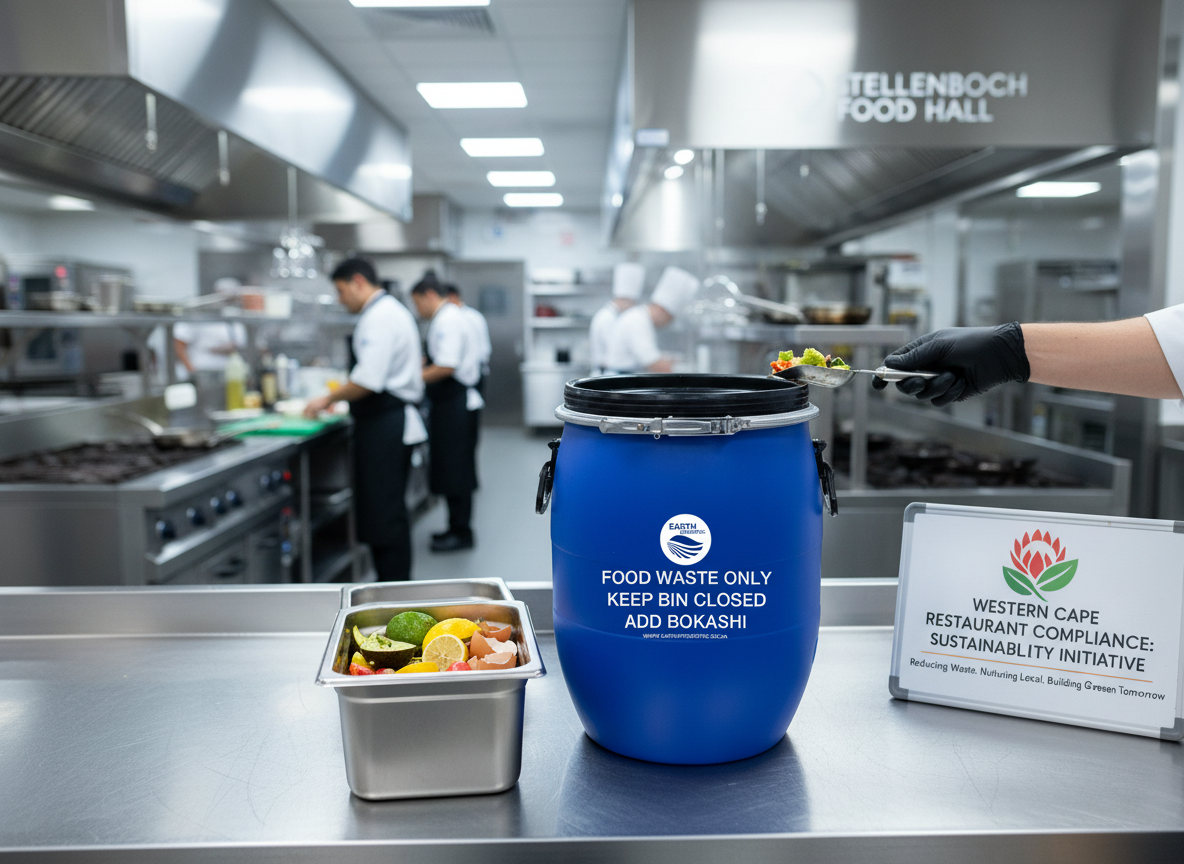
Commercial Bokashi can suit smaller commercial kitchens and canteens. Food waste is placed into sealed food-grade drums and treated with Earth Bokashi.
The system does not require electricity. Therefore, it can provide a practical starting point for businesses that need controlled treatment without complex infrastructure.
For more detail, read Bokashi Food Waste Treatment: Why Businesses Should Reduce Before They Transport.
The Earth Cube is an enclosed aerated static-flow system suited to operations such as lodges, boarding houses and campuses with distributed kitchens.
Its current processing capacity is up to approximately 18 kilograms of food waste per day, or around 600 kilograms per month. Where necessary, businesses can use multiple units in series.
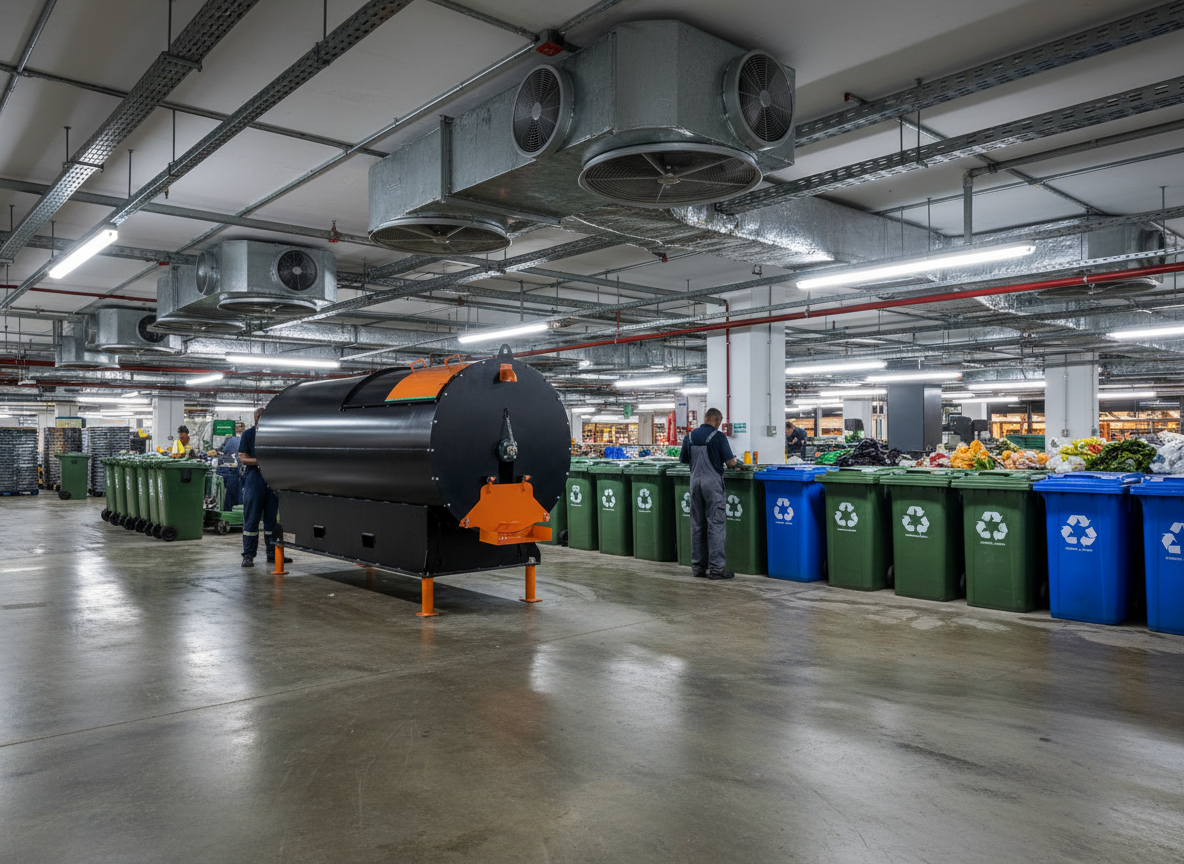
The Earth Cycler provides automated in-vessel treatment for higher-volume commercial operations.
The current range includes models designed for approximately five and ten tonnes per month. In addition, the system supports measurement and can include data connectivity for operational management.
However, the machine is still part of a wider process. Earth Probiotic’s own technical guidance explains that discharged material can remain active and may need further maturation.
Compare the current options on Earth Probiotic’s Food Waste Solutions page or review the technical FAQ.
This is where the September conversation moves beyond treatment equipment.
Organic waste treatment at source can prepare suitable material for the next stage, but the downstream pathway must still be designed.
For some businesses, the treated material may move to an onsite or contracted composting process. For others, a specialist recovery partner may take responsibility for further processing.
In each case, the material needs an appropriate destination.
South Africa’s National Waste Management Strategy 2020 places the circular economy at the centre of national waste strategy. It also recognises recovery and beneficiation as important parts of moving waste away from disposal.
In addition, South Africa has National Norms and Standards for the Treatment of Organic Waste. Businesses should therefore consider the regulatory framework as part of any treatment and recovery plan.
The answer depends on the material, the treatment process and the downstream operator.
Suitable organic material can enter several recovery pathways. Depending on further processing and legal requirements, these pathways may eventually support outputs such as mature compost, soil-improvement products, nutrient recovery, biogas or specialist biological conversion.
However, these are downstream industry pathways. They are not products that Earth Probiotic automatically manufactures when it treats a business’s food waste.
Likewise, a business should not assume that treated material automatically has a buyer.
A genuine marketable product needs more than a circular story. It needs the correct processing, consistent quality, an appropriate use and a real market.
Marketability begins long before someone places a price on the final product.
First, the input stream needs to be suitable. Next, the treatment process must operate correctly. Further processing must then produce an output that meets its intended specification.
Several factors therefore affect commercial potential:
Therefore, the strongest circular model works backwards from the intended destination rather than forwards from the machine.
This question deserves more attention.
For some businesses, the next stage may remain onsite. An estate, lodge or campus may have the space and operational capacity to manage further composting or maturation.
However, another business may rely on a specialist processor or waste-service partner.
In that case, responsibilities need to be clear before treatment begins.
Clear ownership protects the pathway from becoming another version of waste collection.
At-source treatment does not mean that nothing ever leaves the property.
Instead, it changes what moves, when it moves and why it moves.
Untreated food waste contains significant moisture and can require frequent collection. Therefore, transporting every kilogram before considering treatment can create unnecessary logistical pressure.
Organic waste treatment at source gives businesses an opportunity to intervene earlier.
Some material may still need to travel to a downstream processor. However, transport then forms part of a planned recovery pathway rather than acting as the first and only waste-management response.
This is why Earth Probiotic’s core commercial principle remains relevant: reduce and treat before unnecessary transport becomes the default.
Any organisation that generates a consistent food-waste stream can benefit from asking these questions.
Examples include:
In healthcare environments, this discussion relates specifically to ordinary food and organic waste from kitchens, canteens and catering operations. It does not refer to clinical or healthcare risk waste.
A machine should not be the first decision.
Instead, start with the waste stream and work forward.
As a result, equipment becomes part of a management system rather than a standalone sustainability purchase.
Organic waste treatment at source means managing suitable organic waste close to where the business generates it, rather than automatically transporting untreated material elsewhere first. The treatment method should match the waste stream, volume and site.
Not necessarily. Bokashi-treated food waste still needs an appropriate composting or soil stage. Likewise, output from an in-vessel system may need further maturation before it reaches its intended use.
A business should not assume that treated material is automatically saleable. The material may require further processing, quality checks and compliance with relevant requirements. In addition, a genuine market needs to exist for the final output.
No. Earth Probiotic provides systems and support for treating and managing suitable organic waste at the front end of the pathway. Appropriate downstream processors, site operators or other partners may then manage the further processing required for a final product or use.
Not always. Treated material may still need to move to another site for maturation, recovery or further processing. However, the business can plan that movement as part of a defined pathway rather than automatically transporting untreated food waste first.
The commercial value of food waste does not begin with the final product.
It begins much earlier.
A business protects the next opportunity when it prevents avoidable waste, keeps the organic stream clean, measures what it generates and chooses an appropriate treatment process.
From there, suitable material can move towards the right downstream pathway.
For some businesses, that pathway may eventually support a useful or marketable output. For others, the value may lie in better resource recovery, lower transport dependence, improved measurement or a more controlled waste system.
Either way, organic waste treatment at source creates the opportunity to make the next decision before the food waste disappears into a truck.
Treat at source. Measure the stream. Protect the next pathway.
Explore Earth Probiotic’s commercial food-waste solutions or contact the team to discuss the volumes, infrastructure and operating requirements of your site.
Businesses operating in the Western Cape can also consult the Western Cape Government waste-management resources for current organic-waste guidance and planning information.