
Food scraps have a funny way of disappearing from our plates and reappearing in the kitchen bin.
A banana peel after breakfast. Carrot tops from lunchbox prep. Coffee grounds from the first brave cup of the morning. The crusts nobody claimed. The apple core left next to the homework pile.
It all feels small. Until the bin starts to feel heavy, damp and not particularly pleasant.
That is where Bokashi food waste recycling at home gives families a practical way to do things differently. Not perfectly. Not overnight. Just one scrape, sprinkle and sealed bucket at a time.
In this article, we look at:
Food scraps are not finished yet
In most homes, food scraps are treated as the end of the story.
Once they are scraped from the plate or peeled from the chopping board, they go straight into the general bin. Done. Gone. Forgotten.
Except they are not really gone.
Food scraps are organic matter. They come from the soil, from plants, from food systems and from the kitchens where families gather every day. When handled correctly, those scraps can move into a more useful cycle instead of being buried with general waste.
That is the small but important mindset shift behind Earth Probiotic’s Great Food Scrap Rescue Bingo Challenge.
The question is not only, “What are we throwing away?”
It is also, “Could this be rescued first?”
The kitchen bin tells the story
Every household knows the feeling of a wet kitchen bin.
It is the bag that feels heavier than it should. The one that needs to go out sooner than planned. The one that makes you think twice before opening the lid.
A lot of that comes from food waste.
Fruit peels, vegetable offcuts, plate scrapings, tea leaves, coffee grounds and leftovers all add moisture and weight to the general bin. They also make it harder for a household to notice how much kitchen waste is being thrown away each week.
This is not about making families feel guilty. Most people are already juggling enough.
It is about making the next step easier.
When food scraps are separated in the kitchen, the general bin can become cleaner, lighter and more organised. Children can see that waste does not simply disappear. Adults get a more practical routine. The whole household becomes more aware of what leaves the kitchen every day.
Research published in the South African Journal of Science also notes that the way households deal with food waste has environmental implications, with composting preferable to throwing food waste in the trash, while preventing food waste remains the best first step.
Bokashi food waste recycling at home, made simple
For many people, food waste recycling sounds complicated.
There is a fear that it will take too much time, need too much space, or turn the kitchen into a science project. Bokashi helps make the process more approachable.
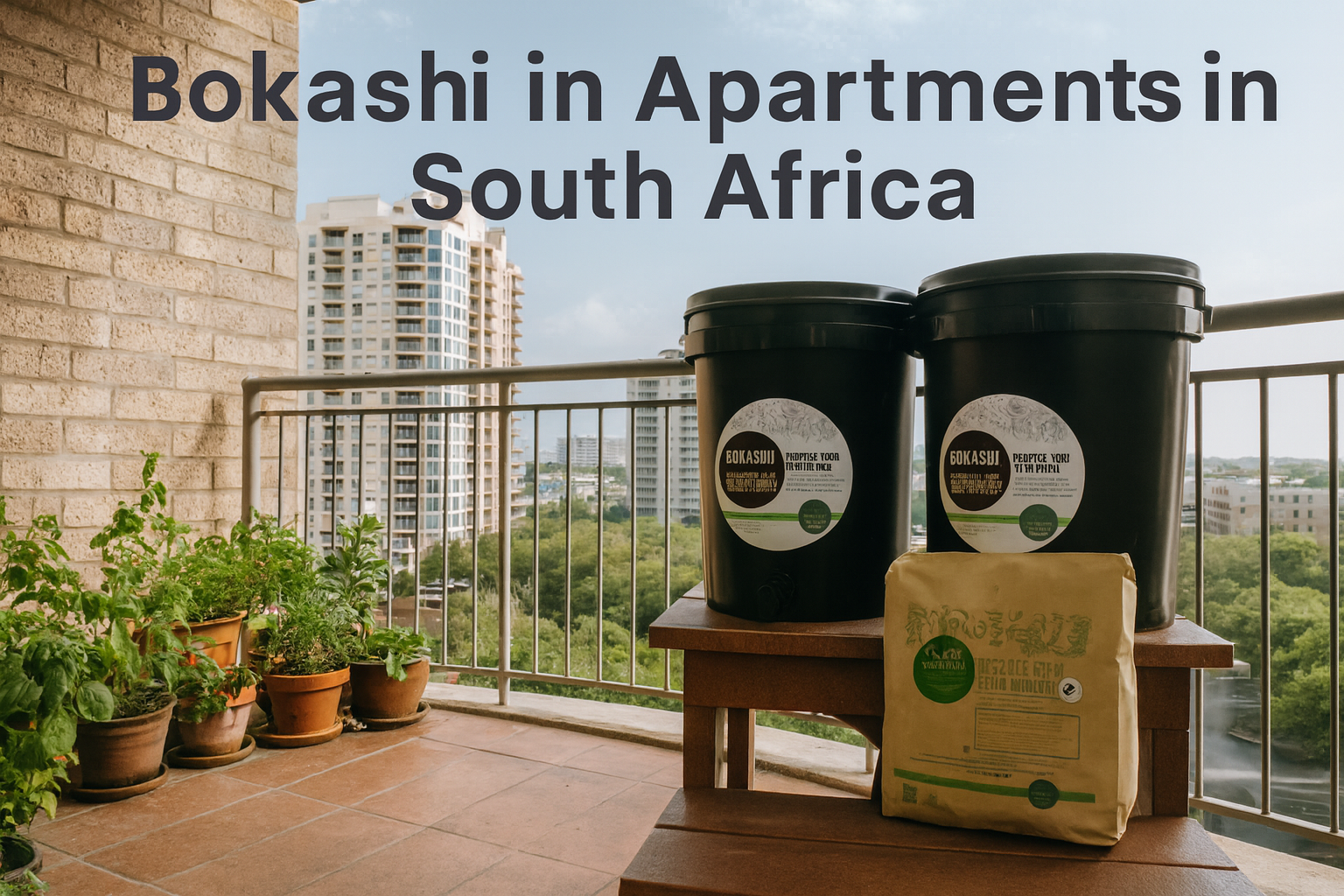
A Bokashi bucket gives households a way to separate and treat food scraps at home. The routine is easy to remember:
Scrape. Sprinkle. Seal. Repeat.
Scrape suitable food scraps into the Bokashi bucket. Sprinkle Bokashi bran over the scraps. Seal the lid properly. Repeat as part of the everyday kitchen rhythm.
That is it.
No grand lecture. No complicated new lifestyle. Just a better habit that can fit into breakfast, dinner prep, lunchbox leftovers and weekend cooking.
Earth Probiotic’s food waste solutions include Bokashi options for households wanting to start this routine at home.
What do you need to start Bokashi at home?
The good news is that Bokashi does not need to take over the kitchen.
To begin, most households need a Bokashi bucket or bin, Bokashi bran and a suitable place in the kitchen where food scraps can be collected after meals.
Earth Probiotic’s shop includes practical starting points such as the Earth Bokashi Starter Kit, Earth Bokashi Bin, Bokashi bran and Bokashi recycling kits for households that want to build a food waste recycling routine at home.
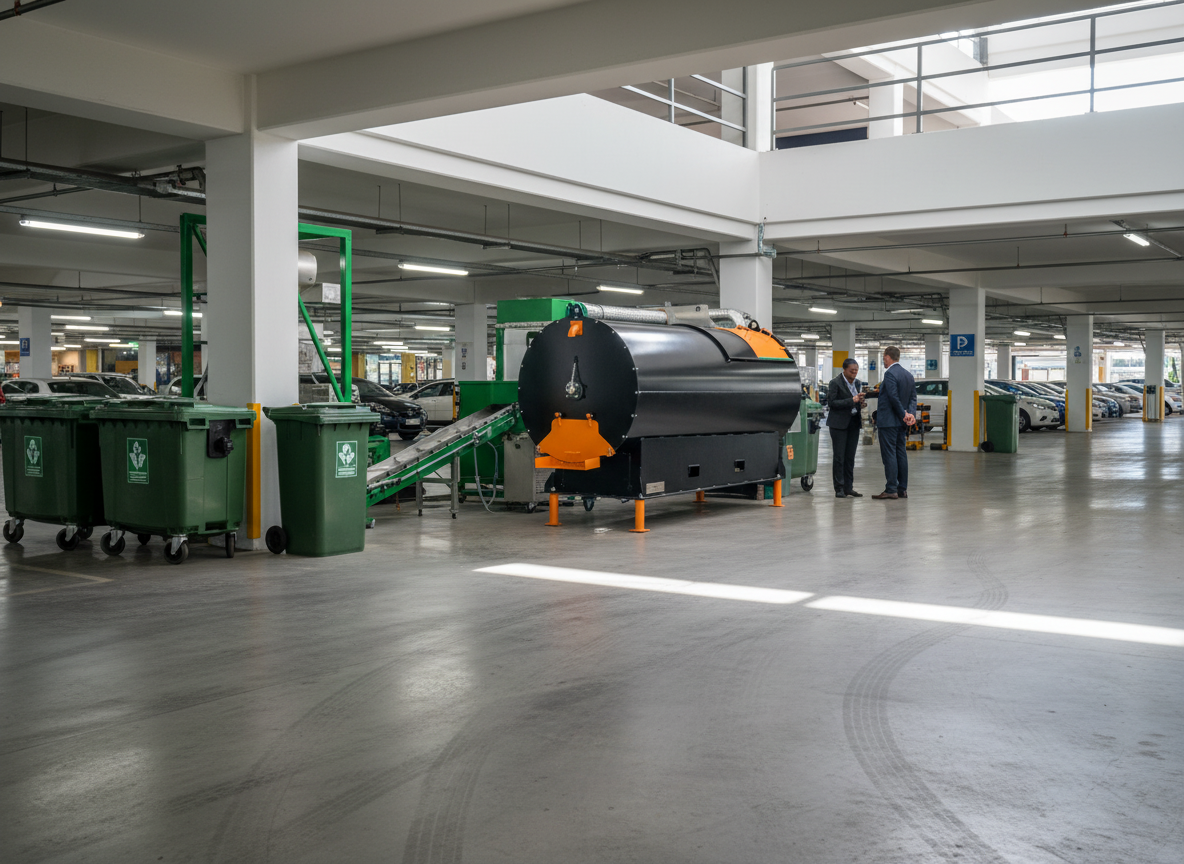
For families who want to take the habit further, the range also includes options such as the Earth Factory, red wriggler composting worms and food waste collection support. That means the first step can be simple, but the routine can grow as the household becomes more confident.
Start with the basics. Keep the bucket close. Scrape after meals. Sprinkle the bran. Seal the lid.
Then tick the bingo square.
That is how Bokashi becomes part of the kitchen rhythm, not another job on the list.
The Great Food Scrap Rescue Bingo Challenge
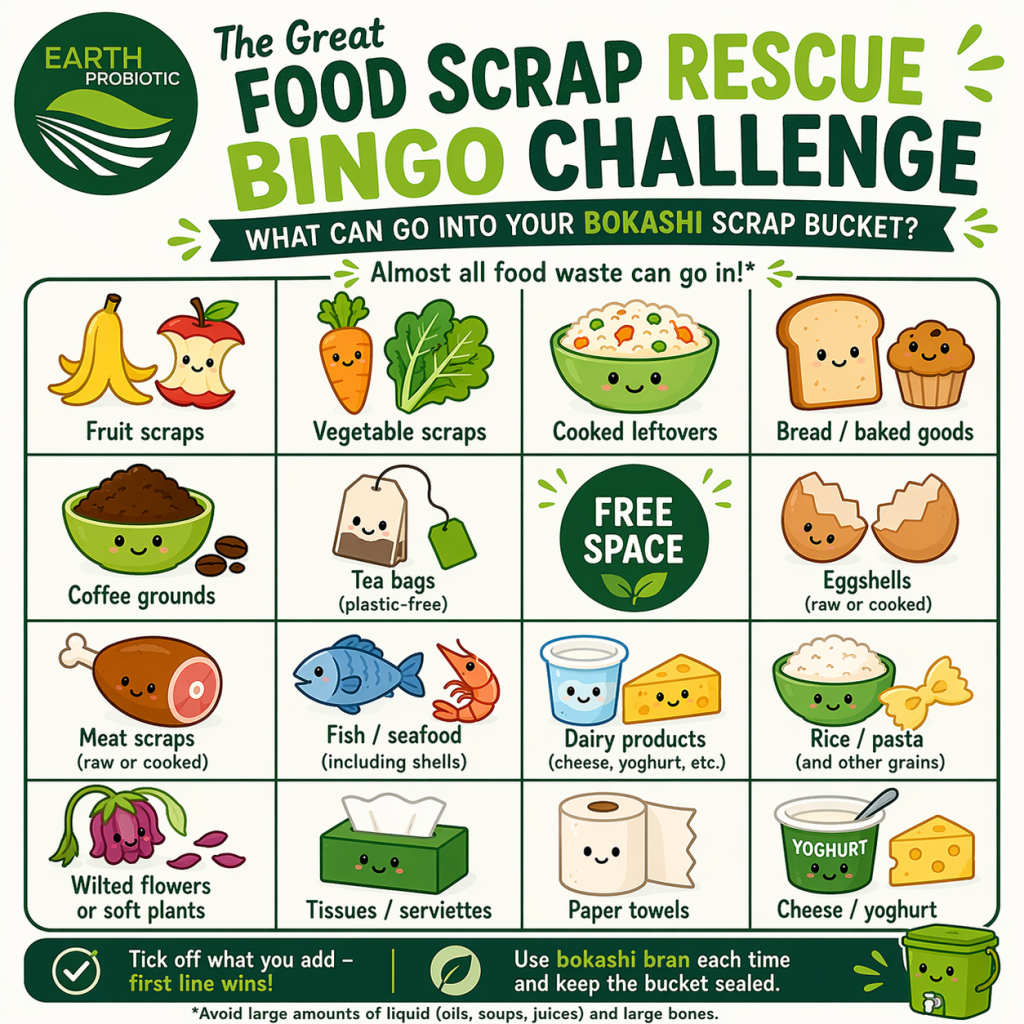
Here is where the campaign becomes more than an instruction.
The Great Food Scrap Rescue Bingo Challenge turns food waste recycling into a family activity. Instead of simply telling households to separate food scraps, it gives them something to save, print, tick off and share.
Each square on the bingo card gives the family a small rescue action to complete. Nothing too difficult. Nothing too technical. Just everyday kitchen moments that help build the habit.
A few possible bingo squares could include:
What happens when you complete a bingo card?
A little reward can make the challenge feel even more exciting, especially for younger children.
The reward does not need to be big or expensive. In fact, the best ideas are the ones that keep the family connected to the kitchen, garden or home.
Here are a few simple reward ideas:
The reward is not really the prize. The reward is the habit.
By the end of the challenge, children have seen food scraps being separated. Adults have built a cleaner kitchen routine. The family has practised a small action that can make Bokashi food waste recycling at home feel normal, visible and easy to repeat.
A family does not need to become perfect at food waste recycling in one week. They just need a starting point. A card on the fridge. A child with a pencil. A parent saying, “Hang on, does that go in the Bokashi bucket?”
Small habits become easier when they are visible.
Children can become part of the habit
Children often notice more than we think.
They notice which bin gets opened. They notice what gets thrown away. They notice when adults turn a routine into something worth talking about.
The bingo challenge gives children a way to take part without needing a technical lesson on organic waste.
They can look for banana peels, apple cores, carrot tops, bread crusts, tea leaves and plate scrapings. They can tick off squares. They can remind the family to seal the Bokashi bucket properly. They can learn that food waste has a next step beyond the bin.
That makes the habit feel less like a chore and more like a household project.
It also creates a more positive conversation around waste. Not “look how much we throw away”, but “look what we rescued this week”.
That small change in language matters.
Less in the bin. More back to the soil.
One of the most practical benefits of Bokashi food waste recycling at home is that it helps families separate wet organic waste from the general bin.
That can make the bin routine feel cleaner, lighter and more manageable.
But the bigger idea is just as important.
Food scraps still contain organic matter. When they are treated correctly and moved into a suitable composting, worm farm or garden process, they can continue towards the soil cycle instead of being treated as general waste.
This is where Earth Probiotic’s message is powerful without needing to be heavy.
The campaign does not ask households to solve the whole waste problem in one week. It simply says: start here.
Start with the scraps from tonight’s dinner. Start with the coffee grounds. Start with the lunchbox leftovers. Start with one Bokashi bucket in the kitchen and one bingo card on the fridge.
That is how a household habit begins.
A better food waste routine starts at home
The Great Food Scrap Rescue Bingo Challenge is designed to make Bokashi feel doable for real families in real kitchens.
The kitchen where someone is making school lunches.
The kitchen where vegetables are being chopped in a hurry.
The kitchen where coffee grounds pile up before 8am.
The kitchen where leftovers do not always make it to the next day.
Food waste recycling does not have to feel complicated or serious to be meaningful.
Sometimes it starts with a simple question:
Does this food scrap deserve better than the bin?
With Earth Probiotic Bokashi, the answer can be yes.
Scrape. Sprinkle. Seal. Tick the square.
That is the beginning of a cleaner bin routine, a more conscious kitchen habit and a simple way to help food scraps move back towards the soil cycle.
Join The Great Food Scrap Rescue Bingo Challenge
Ready to try Bokashi food waste recycling at home?
Download or save The Great Food Scrap Rescue Bingo Challenge, place it where the family can see it and start rescuing food scraps from the bin this week.
One bucket.
One bingo square.
One better kitchen habit at a time.
Visit the Earth Probiotic shop to explore Bokashi bins, starter kits, Bokashi bran and home food waste recycling options.
Lorem ipsum dolor sit amet, consectetur adipiscing elit. Ut elit tellus, luctus nec ullamcorper mattis, pulvinar dapibus leo.