Healthcare organic waste compliance in the Western Cape is becoming increasingly relevant to the companies that prepare and serve food inside healthcare facilities.
That does not only mean the hospital itself.
In many hospitals, clinics, rehabilitation centres and care facilities, an outsourced catering company or food-service contractor manages the kitchen. These vendors often control food preparation, kitchen procedures, separation systems and the first stage of food-waste handling.
As a result, they have an important role in how ordinary food and organic waste is separated, measured and managed.
However, one distinction must remain clear from the beginning.
Food waste from a hospital kitchen is not the same waste stream as clinical or healthcare risk waste.
Earth Probiotic works with suitable food and organic waste. It does not treat clinical waste, sharps, pharmaceutical waste, pathological waste or other healthcare risk waste.
The opportunity lies in bringing greater structure to the ordinary organic waste generated by kitchens, canteens and food-service operations.
For catering companies, healthcare organic waste compliance should begin with control of the food-waste stream.
That means knowing where food waste is generated, how staff separate it, how much the kitchen produces and what happens to the material afterwards.
The process may involve several parties.
For example, the catering contractor may manage separation inside the kitchen. The hospital’s facilities team may control the waste holding area. Meanwhile, an external waste contractor may handle collection or downstream processing.
If nobody defines these responsibilities clearly, gaps can appear between the kitchen and the final destination.
Therefore, a strong system needs more than a labelled bin.
It needs clear procedures, suitable infrastructure, measurement and an agreed onward pathway.
Healthcare facilities already work with highly controlled waste streams.
Clinical waste, sharps, pathological material and certain pharmaceutical or hazardous wastes require specialised procedures because they can present specific health or environmental risks.
Ordinary food waste from meal preparation, staff canteens, patient catering and cafeterias belongs to a different operational stream.
That distinction matters.
The Western Cape Government provides waste-management information and resources through its Waste Management resources.
Therefore, improving food-waste systems should not blur the established controls around clinical waste.
Instead, catering vendors should apply appropriate discipline to the food-waste stream while keeping it completely separate from healthcare risk waste.
The Western Cape continues to work towards its provincial target of diverting 100% of organic waste from landfill by 2027.
Municipal Organic Waste Diversion Plans form part of that process. The province reviews and monitors these plans as it works towards the 2027 target.
Western Cape Government reporting has also referred specifically to supporting the diversion of food waste from hospitals and clinics.
That makes healthcare food services relevant to the wider organic-waste diversion conversation.
However, the provincial target should not be read as one identical direct legal instruction to every hospital, clinic or catering company.
Requirements can vary according to the municipality, facility, contracts, waste activities and applicable legislation.
For that reason, healthcare organic waste compliance should combine good operational practice with an understanding of the specific requirements that apply to the site.
South Africa also has National Norms and Standards for the Treatment of Organic Waste under the National Environmental Management: Waste Act.
The catering contractor often sees the food-waste problem before anyone else does.
Kitchen teams know how much preparation waste they generate. They see returned meals, plate waste and spoiled ingredients. They also know when volumes rise and which service periods create the most pressure.
Therefore, outsourced food-service providers can contribute valuable operational information.
They can help answer questions such as:
This information can support better waste planning for both the contractor and the healthcare facility.
Most problems begin at ordinary operational handover points.
A kitchen may separate food scraps correctly during one shift but mix them during another.
Alternatively, the kitchen may separate food waste well but lose control of the stream once it reaches a shared waste area.
In addition, contamination can remove useful downstream options.
Plastic packaging, disposable gloves, cutlery, cleaning materials and general rubbish do not belong in a clean organic stream.
That is why separation at source matters.
Earth Probiotic explains this principle in more detail in From Waste Liability to Circular Value: Why Separation at Source Is the Logical First Step.
Healthcare organic waste compliance becomes much easier to manage when the food-waste stream is measurable.
A catering company should not have to guess how much organic waste it produces.
Instead, teams can weigh or otherwise consistently record the separated stream.
Over time, the data begins to show patterns.
For example, measurements may reveal excessive preparation waste, repeated overproduction or unusually high returns from a particular meal service.
As a result, waste data can support more than diversion reporting.
It can also help catering teams identify prevention opportunities.
Useful records can include:
Good data creates visibility. Without it, food waste can disappear into the general waste system without anyone understanding the scale of the problem.
A hospital kitchen cannot manage organic waste effectively once food scraps have already been mixed with general rubbish.
Therefore, separation needs to happen where staff generate the waste.
That may mean preparation areas, dishwashing zones, patient meal-return areas or staff canteens.
The exact layout will differ from one facility to another. However, the principle remains the same.
Keep suitable organic material separate from incompatible waste from the beginning.
This approach protects the organic stream and makes treatment, measurement and downstream recovery more practical.
Once a food-service operation understands its volumes and keeps the organic stream clean, it can consider the appropriate treatment approach.
The right system depends on several factors, including daily food-waste volumes, available space, kitchen layout, power availability, staffing and the planned destination of the treated material.
Earth Probiotic offers different food-waste treatment approaches for different operating conditions.
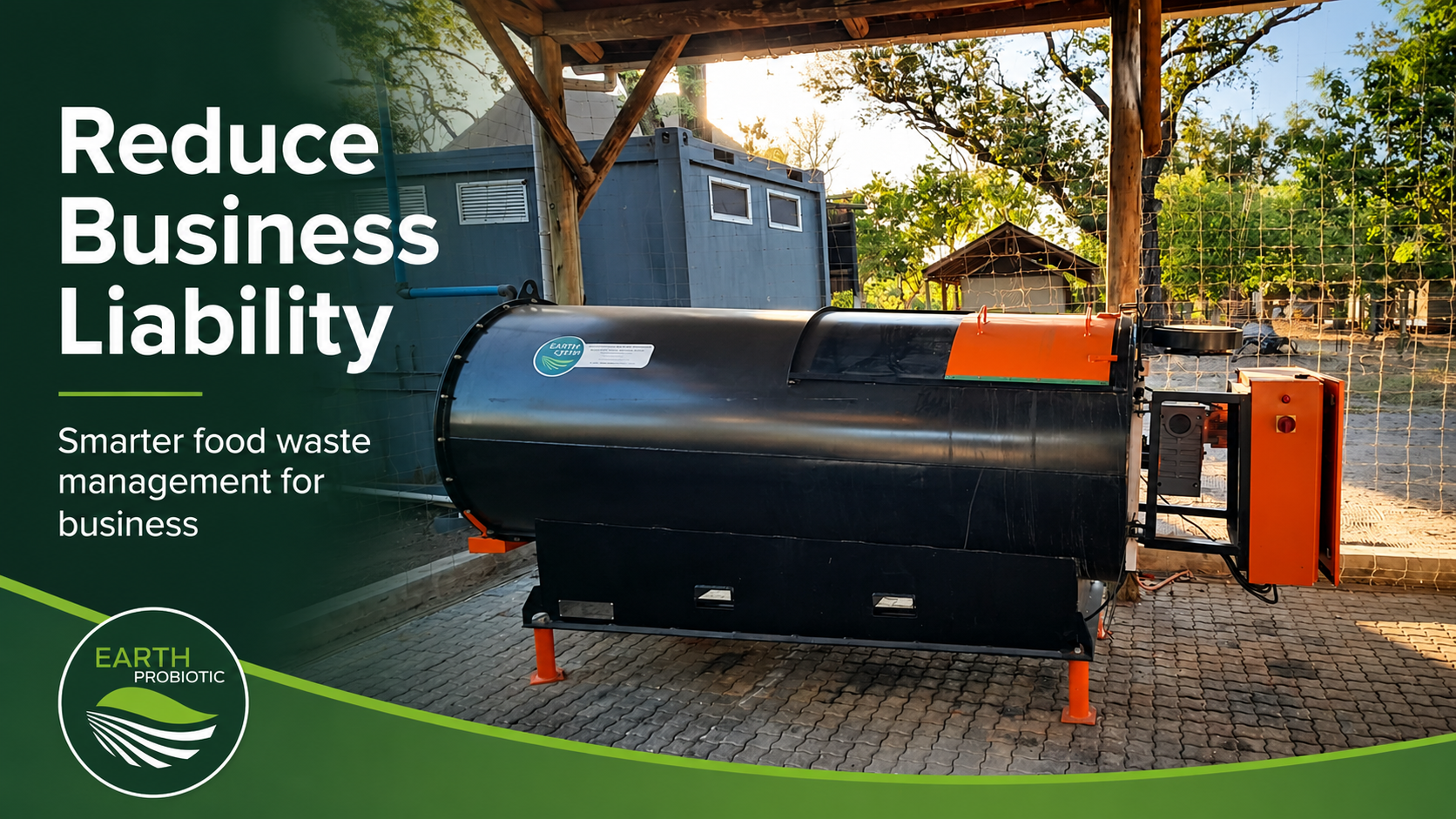
These include Commercial Bokashi for smaller food-waste streams, the Earth Cube for suitable onsite applications and the Earth Cycler for higher-volume commercial operations.
The equipment should follow the waste assessment, not the other way around.
Explore the current options on Earth Probiotic’s Food Waste Solutions page.
For technical information about the treatment systems, visit the Earth Probiotic FAQ.
.
This point is especially important in regulated or highly managed environments.
Treatment at source does not automatically create finished compost or another ready-to-use product.
Depending on the process, treated organic material may still need further maturation, composting or another appropriate downstream stage.
Therefore, the healthcare facility and its food-service partners should understand where the material will go after treatment.
They should also know who takes responsibility for that stage.
A strong system plans the onward pathway before treatment begins.
Responsibility may sit across more than one organisation.
The hospital may control procurement standards and facilities management. Meanwhile, the catering contractor may control kitchen procedures, staffing and separation. A waste or recovery partner may manage the next stage.
For this reason, contracts and operating procedures should answer practical questions clearly.
Clear ownership makes healthcare organic waste compliance easier to demonstrate and easier to improve.