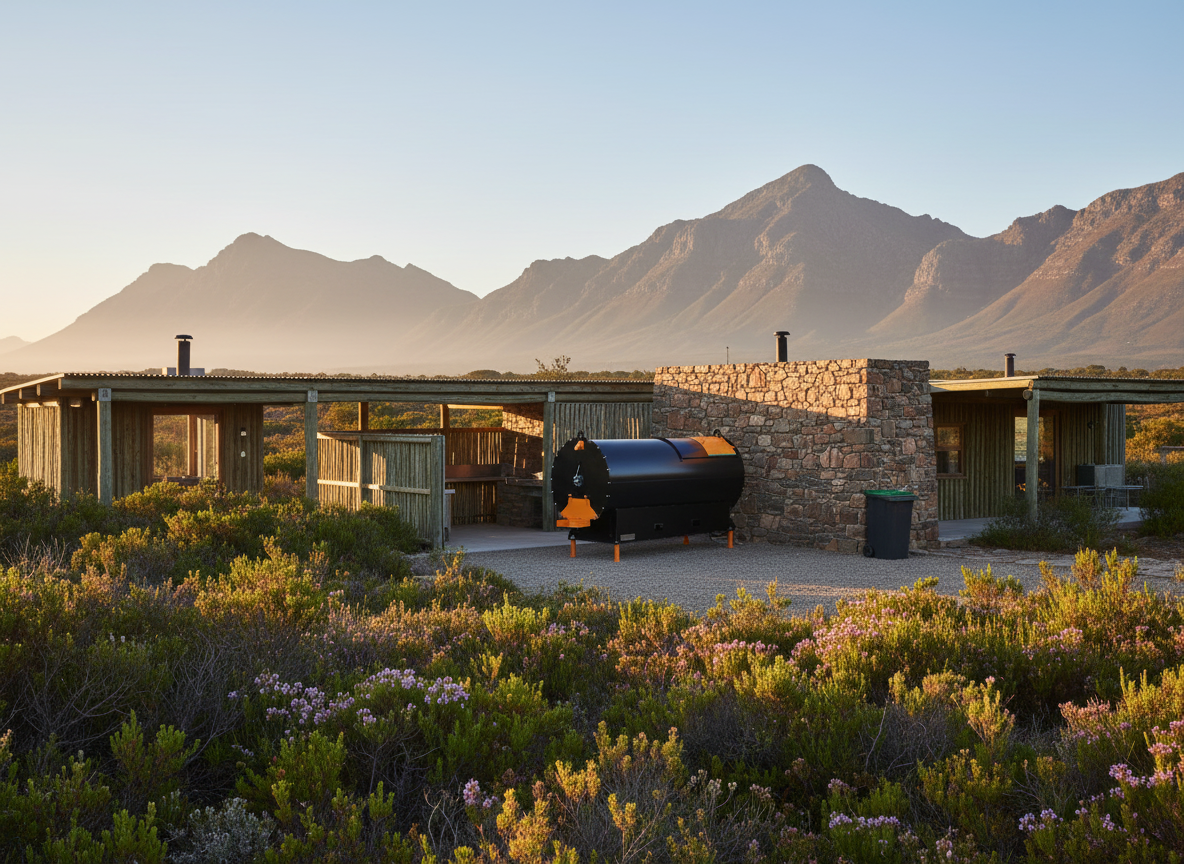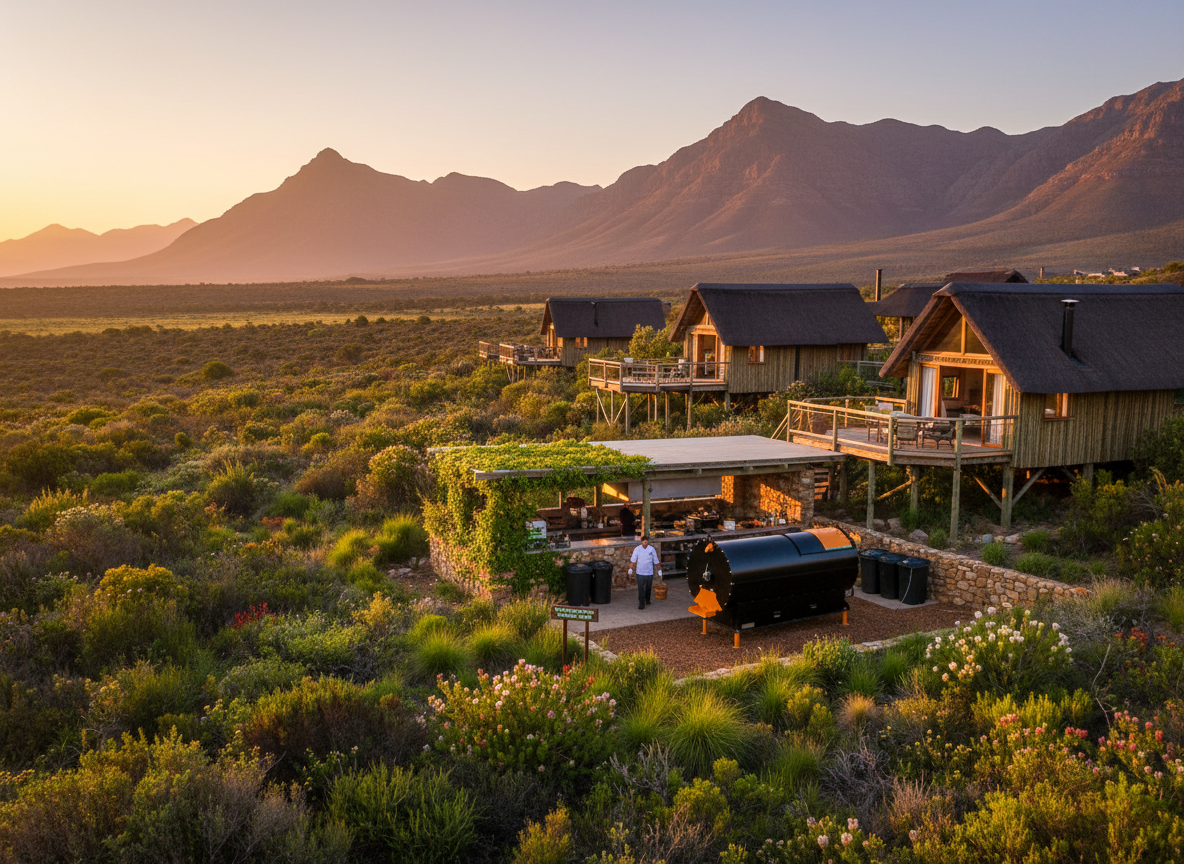

Remote lodge food waste disposal can become a difficult operational problem when municipal collections are infrequent, roads are long and waste needs to remain onsite between removals.
In these circumstances, burying or burning food waste can look like a practical solution. The material disappears from the kitchen, storage pressure reduces and the lodge avoids transporting another load off the property.
However, disappearing from view is not the same as being responsibly managed.
Burial can create problems around wildlife attraction, uncontrolled decomposition and site management. Open burning introduces a different set of concerns, including smoke, air pollutants, fire risk and potential regulatory restrictions.
For remote hospitality operators, the better question is therefore not simply:
How do we get rid of the food waste?
It is:
How can we prevent, separate and treat suitable food waste before disposal becomes the only option?
Putting food waste into a pit can make it disappear from the immediate operating area, but the organic material continues to break down.
How that material behaves depends on the waste itself, the soil, moisture, oxygen levels, depth and location of the burial area.
For that reason, it is too simplistic to assume that burying food scraps automatically makes them environmentally harmless.
A poorly chosen or poorly managed burial area may create odours, attract animals or interfere with the way the property manages waste over time.
There is also an important regulatory distinction between using an appropriate composting or organic-waste treatment process and simply disposing of waste into the ground.
Before burying waste, a lodge should therefore check the waste requirements that apply to its municipality, property and operating conditions.
Yes, it can.
Covering food waste with soil does not necessarily remove the odours that make it attractive to animals.
This matters particularly on game reserves, wilderness properties and conservation sites where changing an animal’s relationship with human food sources can create operational and conservation problems.
A repeated food source near kitchens, staff areas or waste zones can encourage animals to return to places where people work and stay.
Therefore, good remote lodge food waste disposal should focus on preventing wildlife access rather than simply hiding the material from view.
The answer depends on the conditions in which the food waste decomposes.
Methane forms when organic material breaks down in oxygen-limited conditions. This is one of the reasons organic waste in landfill is a significant climate concern.
However, it would be misleading to claim that every food-waste burial pit automatically produces the same methane emissions as a landfill.
The stronger waste-management principle is to avoid uncontrolled disposal and use an appropriate, managed treatment process instead.
Burning may appear to solve the opposite problem. Instead of leaving organic material in the ground, fire rapidly reduces the visible volume.
But open waste burning creates its own risks.
The World Health Organization identifies open waste burning as a source of air pollution. Depending on what enters the fire, emissions can contain a range of pollutants that can affect health and the environment.
This becomes particularly important when food waste is not perfectly separated and the fire also contains plastic, packaging or other mixed waste.
Read more in the World Health Organization guidance on open waste burning.
A lodge should never assume that being remote makes open waste burning automatically permissible.
South Africa regulates waste management through the National Environmental Management: Waste Act and supporting standards. Municipalities can also regulate disposal and burning through local waste and air-quality by-laws.
Some municipal by-laws expressly prohibit the burning of waste except through an authorised facility or with the required approval.
Because requirements vary between municipalities and sites, operators should check the rules that apply to their specific property rather than rely on a general assumption about remote areas.
The National Environmental Management: Waste Act provides the national framework for waste management in South Africa.
The practical challenge is that many remote lodges do not have the same waste infrastructure available to urban businesses.
A collection vehicle may travel a considerable distance to reach the property. Services may run infrequently, and the lodge may need to hold waste onsite for extended periods.
Those constraints are real.
However, they strengthen the case for managing food waste earlier rather than relying on disposal as the first intervention.
The sequence should begin with prevention, separation and treatment where appropriate.
A lodge cannot manage food waste properly if it has already been mixed with general rubbish.
Kitchen scraps, plate waste and other suitable organic material should remain separate from plastic, glass, metal, disposable gloves and general waste.
This matters whether the eventual pathway involves Bokashi, onsite composting, another appropriate treatment process or collection by a service provider.
Separation protects the organic stream and gives management more options.
It also makes measurement possible.
Before deciding what equipment or process a lodge needs, management should understand how much food waste the site actually generates.
Useful questions include:
Once management understands those factors, it can match the treatment system to the site instead of forcing the site to fit the equipment.
Earth Probiotic provides several treatment approaches for different volumes and operating conditions.
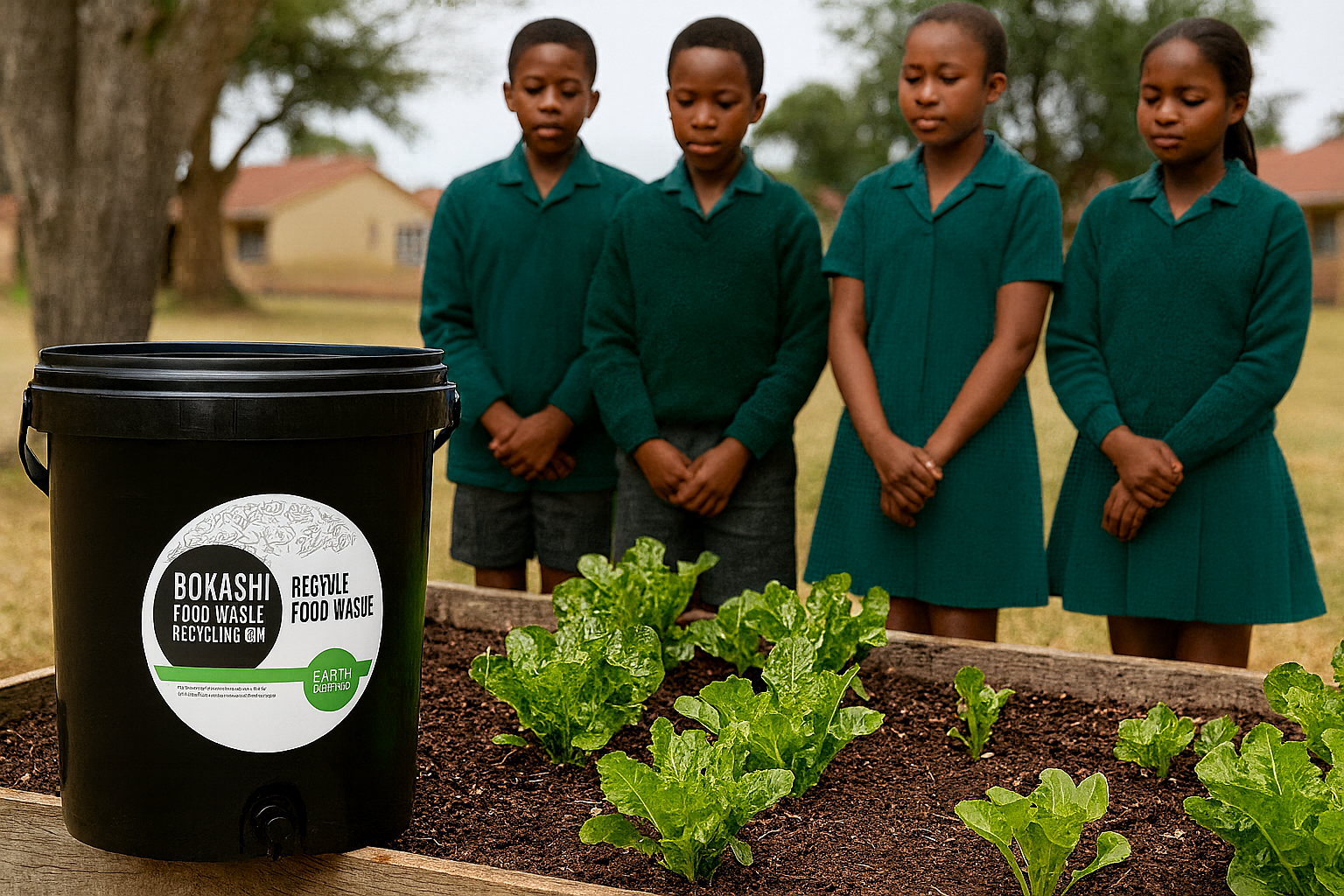
Commercial Bokashi can suit smaller food-waste streams and remote operations that need a straightforward system without electrical infrastructure.
Suitable food waste is placed into sealed food-grade drums and treated with Earth Bokashi.
The system requires no power and allows the food waste to ferment in a closed container rather than remain exposed while awaiting collection or further processing.
The fermented material still needs an appropriate next stage. Bokashi does not turn the food waste into finished compost inside the drum.
The Earth Cube is an enclosed aerated static-flow system suited to sites such as lodges, boarding houses and properties with several distributed kitchens.
It can process up to approximately 18 kilograms of food waste per day, or around 600 kilograms per month.
Where volumes are higher, several Earth Cubes can operate in series.
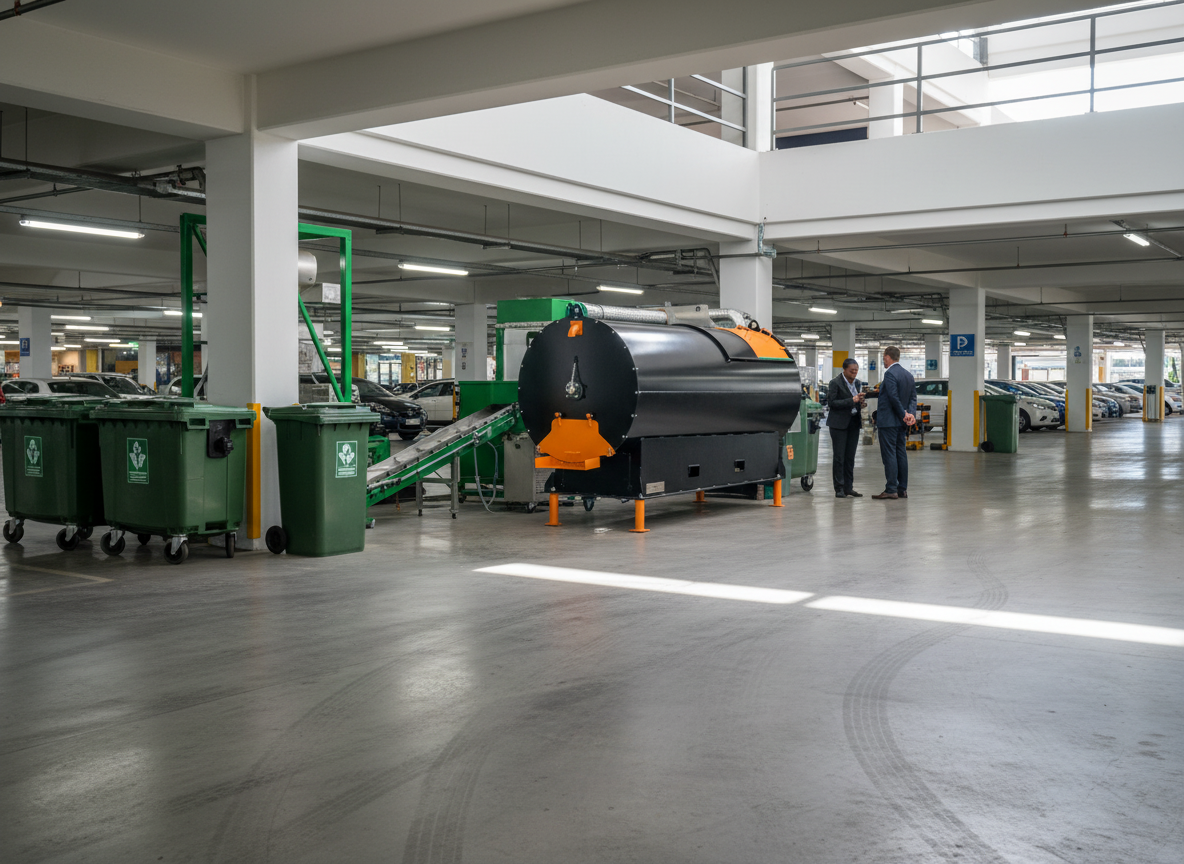
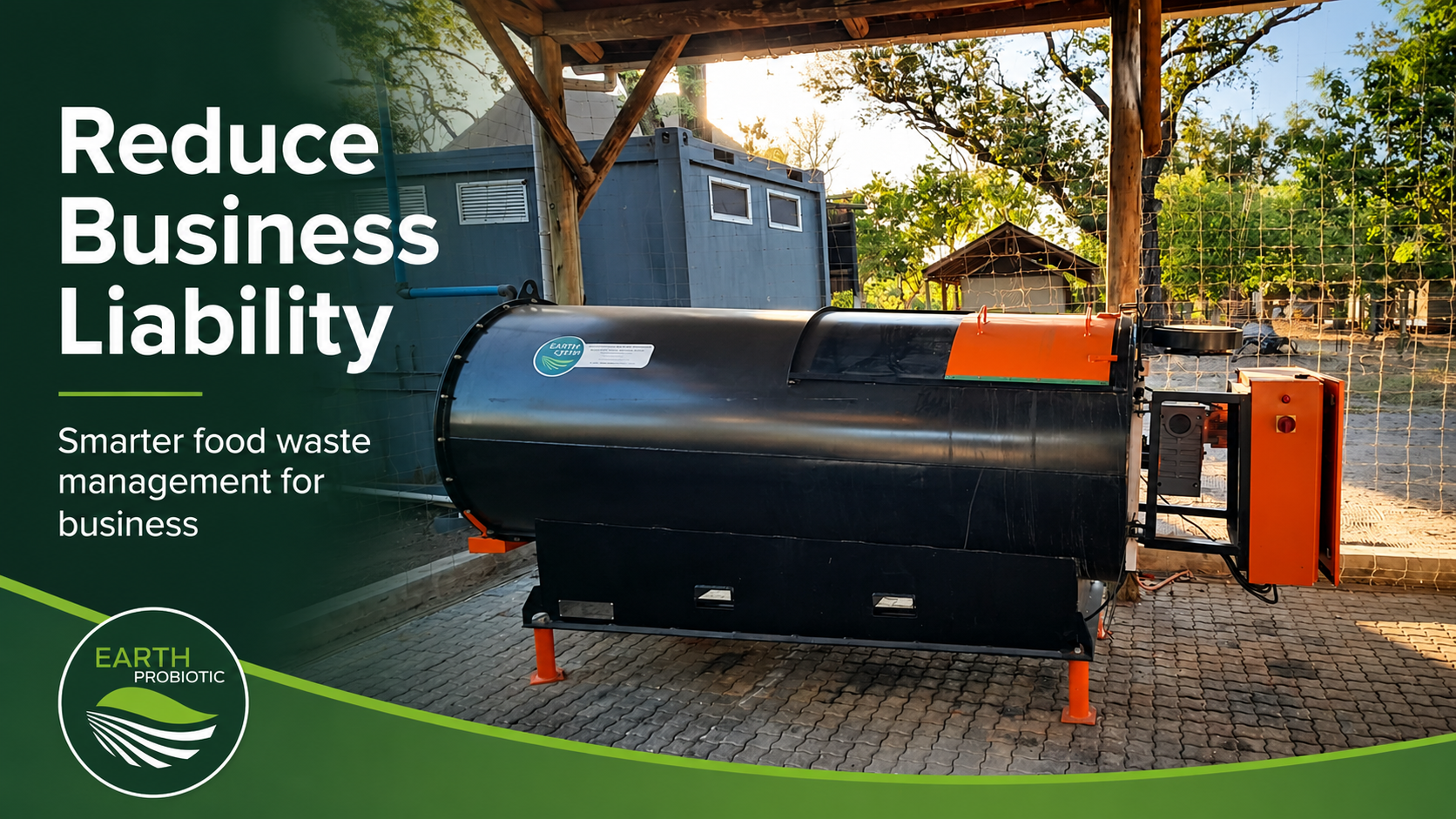
For higher-volume hospitality operations, the Earth Cycler provides automated in-vessel food-waste treatment.
The current range includes systems designed for approximately five and ten tonnes per month.
The Earth Cycler uses relatively little electricity and can work with off-grid power systems through an inverter. Optional data connectivity can also support measurement, reporting and remote machine management.
Explore Earth Probiotic’s current Food Waste Solutions to compare the available approaches.
This distinction is particularly important for remote properties.
Moving food waste into a treatment system does not automatically complete the journey.
Depending on the process, treated organic material may require further maturation, composting or another appropriate downstream pathway.
Earth Probiotic therefore operates as the enabling treatment and system partner at the front end of that pathway.
The company helps operators separate, treat and stabilise suitable organic waste and prepare it for the next appropriate stage.
This is a very different approach from simply digging a hole or lighting a fire and considering the waste problem solved.
For remote properties, food-waste disposal often carries a transport cost that is easy to overlook.
Food waste contains substantial moisture. Transporting untreated scraps over long distances can therefore mean moving a heavy organic material simply because the site has not considered what could happen before collection.
At-source treatment changes that conversation.
Instead of asking only how frequently waste needs to leave the lodge, management can ask what can be prevented, separated and treated before transport becomes necessary.
This does not eliminate transport in every situation. Rather, it makes transport one stage in the process instead of the starting point.
Remote hospitality operations need practical systems that work despite distance, limited infrastructure and fluctuating guest numbers.
That does not make burying or burning the only realistic options.
A stronger approach begins by understanding the food-waste stream.
For remote lodges, good waste management is not about making organic material disappear.
It is about knowing what happens to it from the moment it leaves the kitchen.
Do not bury the problem. Do not burn the problem. Manage the food waste before disposal becomes the only option.
Explore Earth Probiotic’s food-waste solutions for lodges and commercial hospitality operations, or contact the team to discuss the volumes, infrastructure and requirements of your site.